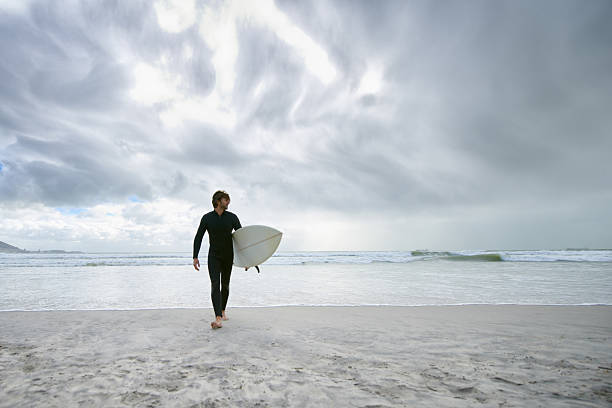
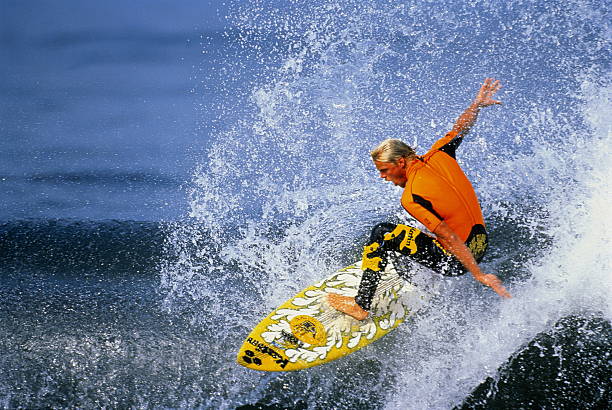
There’s a stretch of reef off Oahu’s North Shore that doesn’t just break waves—it breaks souls, boards, and sometimes bodies, all while handing out the deepest, thickest barrels this planet can serve. The Banzai Pipeline. Just the name alone gets your heart thumping like a bottom turn at sunset. It’s not the biggest wave, not by a long shot. Jaws and Mavericks have double the height and triple the fear. But pipeline, in its shallow, grinding, hollow perfection, is the one that every surfer dreams of threading. And it’s the one that wrote the modern history of tube riding as we know it.
Pipeline wasn’t always the crown jewel of the surf world. Back in the early sixties, the North Shore was all about big Waimea, where feats of sheer courage got you stoked and respected. But there was a crew of young rebels, guys like Phil Edwards, Dickie Cross (who famously paid the ultimate price at Waimea), and a whole generation who looked at that shallow inner reef at Ehukai Beach and thought, no way. Then a few mad men like Greg Noll and Butch Van Artsdalen paddle out and see something nobody had seen before. Butch, with his Hawaiian pigdog nickname and his own brand of raw abandon, was the first to actually make a down-the-line drop and get to the bottom of a Pipeline wave without cartwheeling. He wasn’t riding it like today’s performance style, but he was showing that it could be done. And by the late sixties, Pipeline was a proving ground.
The surf craftsmanship that Pipeline forced into existence is unreal. The wave breaks on a sharp lava reef barely ten to fifteen feet deep, and the takeoff is a freefall drop into a vertical wall that instantly pitches and throws. You don’t pump down the line—you either get barreled immediately or you get detonated. The first generation of surfers who truly mastered the barrel, like Jock Sutherland and Jeff Hakman, they were just trying to survive the closeout and get out the back. The idea of riding inside the tube with your hands deep in the green room, that was a fantasy until guys like Gerry Lopez came along. Lopez, the frozen banana of the North Shore, was the first to turn Pipeline into a canvas. His deep, casual, steezy tube rides through the seventies changed everything. He showed that you could get inside the barrel, stay calm, and come out with a smile. That’s when Pipeline shifted from survival to art.
Modern times cranked the level even higher. Guys like Matt Archbold and Todd Chesser in the eighties, then Jamie O’Brien and John John Florence in the twenty-first century turned Pipe into a gymnastics course. They’re doing backhand airs, forehand snaps on the foam ball, and pulling into barrels that would have ended a life fifty years ago. But the culture around the spot is still heavy with respect. The local surfers, the Hawaiian crew from the Waikiki Surf Club and the North Shore boys, they hold the key to the lineup. You don’t just show up and paddle out. You earn your place through humility and having your surfer’s IQ sharp enough to know where the drop zone is, where the reef shadows are, how the current shifts with the swell direction. That’s surf heritage, passed down by generations who bled and suffered there.
Pipeline is also a stage for the most brutal wipeouts ever filmed. The reef is unforgiving. You hit it headfirst and it feels like a baseball bat made of lava. The shallow dry reef, the “toilet bowl” section, has collected more teeth and fins than any other wave on Earth. Yet surfers keep paddling back, because when you get a dry, perfect barrel at Pipeline, when you see the whole ocean curl over you in this glassy, neon green tube, there is nothing like it. It’s spiritual. It’s the ultimate connection between human and sea.
Today, Pipeline remains the benchmark. Every winter, the contest at the Banzai Pipeline is the Super Bowl of surfing, not just because of the scores, but because of the stories. The wave doesn’t care about your glory. It will humble anyone. But it also gives more stoke than any other reef pass in the world. For a surfer, that empty beach facing that defined peak is sacred ground. Legends have been written there, broken there, and reborn there. And every time you watch a surfer drop into that shimmering cliff of water, you know you’re witnessing history in its rawest form. That’s Pipeline, baby. Forever the proving ground.