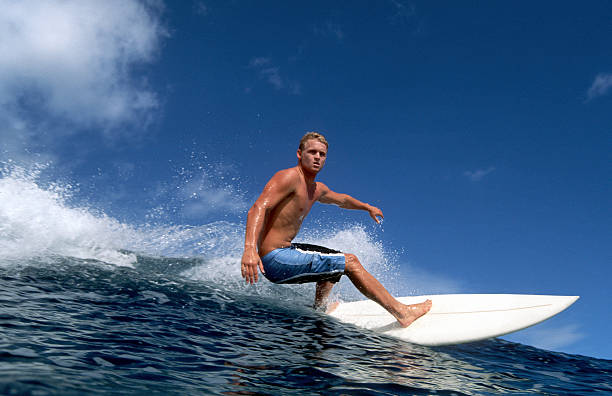
You paddle out at dawn, chest-deep in a glassy green soup, and suddenly you’re not just a person on a board. You’re part of a floating tribe with its own tongue, a dialect born from salt spray, close calls, and the unspoken urgency of a pitching wave. Learning to speak lineup isn’t about sounding cool at the shaka-fueled beach bonfire. It’s your ticket to survival, respect, and a front-row seat to the best sets without getting yopped. The ocean doesn’t have a referee, so the lineup does. And that referee speaks a language you’d better pick up faster than a south swell fills an empty bay.
The first word you need to own isn’t a word at all. It’s the _glance_. Before anyone shouts, before any hoot or holler, the lineup is a chessboard of subtle eye contact. You see a dude stroking into a bomb on the outside, and you know he’s claimed it. You catch his eyes and give a quick nod, a non-verbal “she’s yours.” That’s the base layer. Then comes the call. When you’re paddling for a set wave, you don’t want to waste your energy on a closeout or a wave that’s too fat. So you hear someone yell “Peak!” or “Outside!” or “Go left!” That’s not just chatter. That’s the navigation system of the sea. “Left” means the wave breaks to your left as you face the beach. “Right” the opposite. If you mix those up, you’re not just a kook. You’re a hazard.
Speaking of kooks, let’s talk about the insults—because surfer speak is as much about calling out bad behavior as it is about calling waves. The most common is “dropping in,” which is stealing a wave someone else is already riding. That’s the cardinal sin. If you do it, you’ll hear a sharp, angry “Hoy!” or “My wave!” or the universal “Oi!” followed by a ton of saltwater language that doesn’t need a translation. Then there’s “snaking,” which is paddling around a surfer to get the inside position for the same wave. That’s a quieter, sneakier crime. And the dude who does it? He’s a snake, a weasel, or just a plain old grommet with no manners. But you don’t always have to fight. Sometimes the lineup plays nice, and you hear “Party wave!” which means multiple surfers are going to paddle in together and share the wave, no harm no foul. That’s the aloha spirit, filtered through a frothing shore break.
Now, the vocabulary of position. You’ve got the “lineup” itself, the spot where waves are breaking and surfers sit waiting. Beyond that, there’s the “inside,” the shallow zone close to the beach where whitewater churns, and the “outside,” the deep-water staging area where the sets roll in. When you’re “on the shoulder,” you’re riding the unbroken section of a wave rather than the steep curl. And the “pocket” is the sweet spot, the power zone where the wave’s energy is cranking. If someone says “You’re in the pocket,” you better be ready to pump, because that’s the best place to be. But if you hear “You’re too deep,” you’ve got bigger issues—you’re too far inside the curl, and the wave is about to slingshot you into a sand-blasting wipeout.
The art of calling priority is where the language gets real. Say you’re sitting on the peak, the most coveted spot, and a set looms. You need to establish that wave is yours. You don’t just paddle. You yell “I’m going!” or “Taking the next one!” But you also need to be aware of the other surfers. The one on your inside? He might have priority because he’s closer to the peak. So you defer. That’s where “Go ahead” or “You got it” comes in. And when you’re the one who yields, you get respect. The elder statesmen in the water—the old salts who’ve been surfing since before you were born—they don’t yell much. They just sit there with a calm look and a suspiciously clean board. But when they say “That one’s got your name on it,” you’d better charge. They can read the ocean like a text, and their lingo is sparse, precise, and heavier than a winter swell.
Finally, there’s the hoot, the celebratory scream when you ride a barrel or nail a deep turn. That’s not just noise. It’s the highest form of praise in the lineup. You’ll hear “Woo-hoo!” or “Yew!” or just a raw, guttural “Aaahh!” that echoes off the cliffs. That’s the universal signal that you just did something gnarly. And when you’re paddling back out, gasping for breath, the guy who hooted might nod and say “Sick, brother.” That’s the currency of the ocean. That’s what makes you realize the lineup isn’t just a place. It’s a conversation that never ends, carried on the wind and the swell, spoken by everyone who paddles out with respect in their heart and salt in their veins.