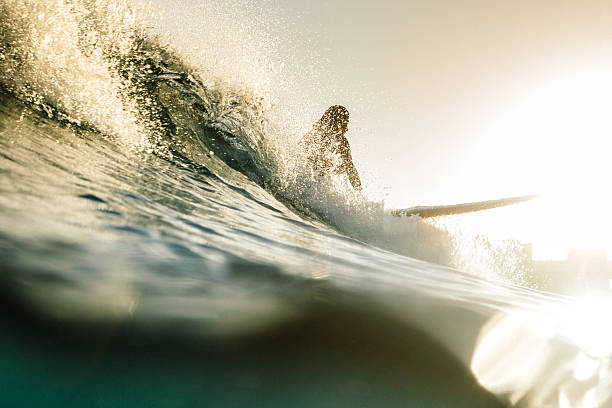
You paddle out on a glassy morning, the ocean flat as a mirror, and you realize too late that your deck feels like a slip-and-slide at a kid’s birthday party. Your feet skate, your pop-up stumbles, and the wave you were eyeballing peels off without you while you flail like a startled pelican. The culprit? Neglected surf wax. That humble block of sticky goodness is the unsung hero of every session, the quiet grip between your soles and the fiberglass that lets you crank bottom turns without kissing the rail. Without it, you’re not surfing—you’re just doing a very wet interpretive dance.
Let’s talk about the wax itself, because there’s more to it than grabbing whatever bar is lying in the bottom of your board bag. Surf wax is a blend of paraffin, microcrystalline waxes, and resins that give it that tacky, honey-like feel. It’s engineered to melt just enough under your body heat to form a microscopic layer of grip, but not so much that it slides off your board in a temperature tantrum. That’s why you’ll see surf bags full of different blocks labeled for cool, warm, and tropical waters. In cold water, the wax stays harder so it doesn’t turn into mush. In tropical water, it gets softer so it still grabs in the heat.
Temperature isn’t just a suggestion; it’s the whole game. Slap a tropical blend on your deck in 55-degree water and you’ll be riding on ice cubes. Use a cold-water bar in the Caribbean and you’ll leave a slug trail of wax down the face of every wave. The trick is matching the wax to the conditions you actually surf. Look at your local buoy readings and check the water temp, not the air. Then buy accordingly. Most guys know this, but plenty of groms still grab whatever is on sale and end up swimming more than surfing.
Applying wax is a ritual, a meditation even. You don’t just rub it back and forth like you’re trying to erase a pencil mark. Start with a clean deck, free of old grit and sand. If you’re putting down a base coat, use a harder wax and press it into the board with a circular motion, creating little nubs that the top coat can lock into. Then for your top coat, switch to the temperature-appropriate wax and go with long, crosshatch strokes—diagional both ways. This creates a textured pattern that grips your feet from every angle. Let it sit for a few minutes to cure. Some folks even leave their boards in the sun for a bit, but don’t overdo it or you’ll have a greasy mess.
Here’s the thing about surf wax that most beginners don’t get: it doesn’t last forever. After a few sessions, your feet will press it flat, sand will grind into it, and saltwater will strip away the stickiness. You know that slick feeling when you’re paddling out and your front foot slides forward? That’s your cue to rewax. Scrubbing off the old layer with a wax comb is cathartic, too. You scrape those little curls of dirty wax off the deck, wipe it down, and give the board a fresh start. It’s like hitting the reset button on your stoke.
Now, the eco side of things. Traditional surf wax can leave a trail of petroleum-based residue in the lineup, and those little wax pellets you scrape off your board often wash into the ocean. Lately, a bunch of brands have been stepping up with plant-based and natural waxes made from beeswax, coconut oil, and tree resins. They perform just as well as the old school stuff, and they break down without poisoning the reef. If you care about the waves you’re surfing—and you should—give those a shot. They smell better too, like a fresh tropical breeze instead of a chemical factory.
Then there’s the whole culture of wax itself. You see those rainbow-colored bars stacked on checkout counters, the funky names, the stickers. Wax has become a badge of identity, as much as the fins you ride or the stickers on your deck. Some surfers obsess over their wax preferences like coffee snobs obsess over single-origin beans. And really, why not? Your wax is the interface between you and the board. It’s the first thing that touches your skin, the silent partner in every barrel and every cutback.
One more tip: don’t forget the deck pad. If you ride a shortboard or a fish, a traction pad on the tail gives extra grip without needing wax all the way back. But for the front foot, wax is still king. Some guys go full pad and skip wax entirely, but they’re missing out on that tactile connection, that raw feel of board against skin. Wax keeps you honest, forces you to adjust your stance, and reminds you that surfing is a craft, not just a ride.
Next time you paddle out, take a second to run your hand across your deck. Feel that tacky texture, that promise of grip? That’s your security. That’s the thing that keeps you planted when the wave hollows out and you need to drive through the bottom turn. So wax on, wax off, and do it with some love. Your feet will thank you, your wave count will climb, and you’ll wonder how you ever surfed without it.