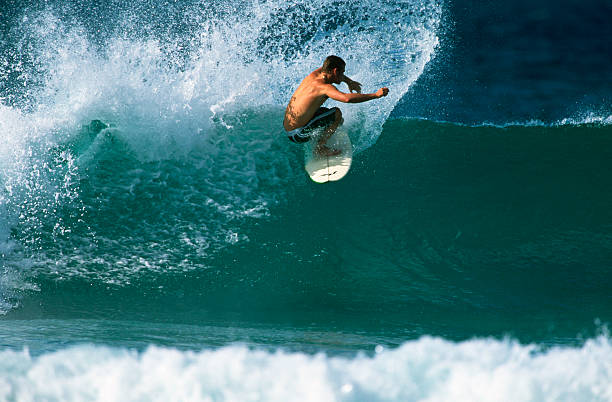
Picture this: you’re out on a glassy morning, the ocean corduroy, and you just caught the sickest wave of your life. You’re flying down the face, bottom turn, big ol’ cutty, and then your feet slip off the waxed-up deck. Your board shoots out from under you, and the leash yanks taught, keeping your steed from becoming a missile aimed at a bopper in the lineup. The plastic cord wrapped around your ankle is the unsung hero of modern surfing. Without it, we’d all be swimming laps and chasing driftwood. And while the leash keeps you connected, the traction pad keeps your back foot planted, giving you the grip to stomp airs. Together, these two pieces of gear have transformed surfing from a flailing dance of wax and luck into the grindy, aerial, full-throttle shred-fest we love today.
Let’s rewind to the old days, before leashes were a thing. Surfers back in the ’60s had to turtle roll and hang onto their boards with white-knuckle grips. If they wiped out, they’d do the deep-water recovery shuffle to grab their board before it hit the beach. A lost board meant a long swim, a busted fin, or worse—a guy in the lineup getting a fiberglass headache. The first leashes were homemade, surfers rigging surgical tubing to their ankles, but they weren’t reliable. Then came Pat O’Neill in 1971, who invented the first functional surfboard leash after realizing it could save his dad from getting clocked. Purists called it a kook strap, but the leash caught on quickly. Brands like Creatures of Leisure, FCS, and Pro-Lite started making leashes that were stronger, swivelier, and more durable. These days, a good leash is made of polyurethane with a stainless steel swivel and a rail saver. Whether you’re riding a longboard in mushy waves or a potato chip in double-overhead reef breaks, there’s a leash from heavy-duty comp models to skinny pro ones.
Now let’s talk traction. Back in the day, surfers relied on a thick coat of surf wax for grip, but wax melts, wears off, and turns into a slippery mess after a long session. It also doesn’t cut it when you’re landing a big air or driving your back foot through a lip smack. That’s where the traction pad comes in. The idea started with a simple strip of foam glued onto the tail, giving the back foot a perfect sticky spot. Companies like FCS and others developed pads with various textures, from smooth bubble patterns to aggressive grip-n-tear looks. A traction pad typically has a kick tail, a raised bump that locks your back foot in place when you’re getting vertical. It also lets you skip wax forward of the pad, saving you from a patchy waxing session. Modern pads are made of lightweight EVA foam with a high-tack adhesive that sticks to any surfboard—epoxy, poly, or carbon fiber. You’ve got pads with channel grooves for water flow, arch cutouts for better feel, and wild colorways to match your stick.
Leash and traction brands are more than just gear peddlers—they’re part of surf culture. Creatures of Leisure, founded in the 1980s, is known for making virtually indestructible straps and leashes, with a crew of surfers testing them in heavy Atlantic swells. FCS, originally famous for fins, jumped into traction and leashes with obsessive engineering, creating products used by tour pros and weekend warriors. Pro-Lite, a traction pioneer, has been molding pads since the early ’90s, pushing the envelope of grip tech. These brands keep us safe and secured, letting us push our limits without fear of a long swim or a loose board.
So next time you’re waxing up and strapping that leash around your ankle, give a nod to the stoked innovators who turned simple rubber and foam into the backbone of your session. The leash and traction pad are like the seatbelt and cockpit of your surfboard—one keeps you connected, the other keeps you in control. With the right gear, you’ll be chasing endless summers, carving green shoulders, and walking away from wipeouts with just a grin. Stay stoked, grip it tight, and let the tether do its thing.