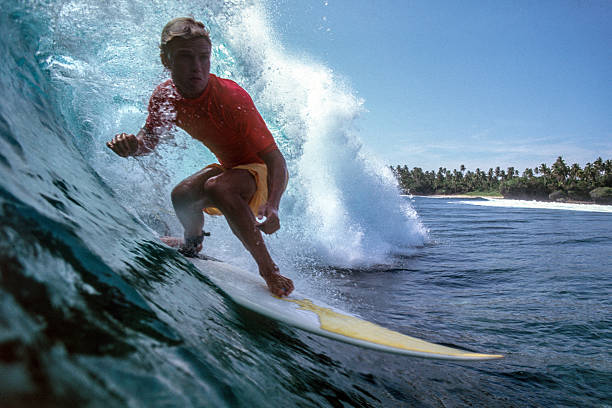
You paddle out at dawn, the horizon is a clean line of gold and the water is glassy. The only thing on your mind is the set coming through, the perfect line, the feel of the rail digging in. You’ve got your wax, your leash, your board. But what about the stuff you put on your skin before you even touched the sand? It’s easy to grab whatever is cheapest from the pharmacy, slap it on, and think you’re good. But if you’re surfing the lineups of the world, you ought to know what that white, greasy goop is actually doing. Not just to you, but to the very wave you’re already thinking about dropping in on.
For a long time, sunscreen was just sunscreen. A necessary evil for the wax-heads who weren’t keen on looking like a lobster after a dawn patrol session. The smell of coconut and that familiar white paste was just part of the gear bag, right next to your fins and a backup wetsuit plug. But times, they change. The collective consciousness of the surfing community has shifted. We’ve all heard the word “reef-safe” thrown around the parking lot, but do you really know what it means when you’re staring down a barrel at Pipe or just cruising the beach break by your house?
The ugly truth is that a whole lot of the old-school sun protection is full of chemicals that are terrible for the marine ecosystem. The two main culprits are oxybenzone and octinoxate. These aren’t just hard to pronounce; they are literally poison to the building blocks of the reef. When you splash in for a session, that sunscreen washes off. It doesn’t just disappear. It hangs around in the water column, and when it hits living coral, it causes bleaching. It’s like a little invisible storm that damages the coral’s DNA, messes with their reproductive cycles, and can kill them outright. For a creature that takes decades to grow a single foot, that’s a heavy blow. And it’s not just the deep, exotic reefs. It affects the entire food chain, from the tiny plankton that feeds the mullet to the big ulua that might be waiting outside the lineup.
So what’s a surfer to do? You can’t just stop wearing sunscreen. The sun is a brutal, beautiful beast, and it will cook you out there. Skin cancer is real, and a gnarly sunburn can ruin a whole surf trip. The answer is a switch to mineral-based sunscreens, primarily using zinc oxide or titanium dioxide. Think of it like a physical barrier rather than a chemical sponge. Instead of absorbing the sun’s rays and converting them to heat (which is what oxybenzone does), mineral sunscreen sits on top of your skin and reflects the rays away. It’s like putting a tiny mirror on your nose. It’s safer for you, safer for the fish, and safer for the waves you love.
Now, there’s a catch. The surfing community has been wary of zinc for years because of the infamous white face. Jimmy Buffett’s picture, right? The life guard with the stripe of white across the nose. That look is iconic, but it’s not always the most practical for a heavy session in the hooded wetsuit. But the technology has come a long way. Modern “non-nano” zinc sunscreens are ground finely enough that they don’t leave that heavy, cakey white smear. They rub in clear, or at least sheer. The key is “non-nano.” You want the particles to be too big for the coral’s polyps to absorb them. You want protection that sits on top of your skin and the reef’s skin, not one that gets absorbed and messes with biology.
It’s about respect. Respect for the ocean that gives you that perfect glide. Respect for the creatures that live in it. Respect for the next generation of groms who will be paddling out after you. The surfing lifestyle is rooted in a connection to nature. You feel the wind, you read the tides, you understand the swell. This is just another part of that ritual. When you’re packing for a trip to Indo, or just heading down the coast for the weekend, look at the ingredients on that bottle. If you see oxybenzone, put it back. Grab the stuff with the zinc. It might cost a few more dollars, but that’s just the price of keeping the ocean clean.
So next time you’re sitting on your board, waiting for the next set, take a look around. That turquoise water, that healthy coral below you, that teeming life. It’s all connected. You are part of it. Don’t be the guy who ruins the lineup for everyone else. Be the guy with the natural, reef-safe approach. Be the waterman who understands that protection isn’t just for your skin, but for the very wave you came to ride. It’s just common sense in the end. Keep the ocean clean, and the ocean will keep you stoked.