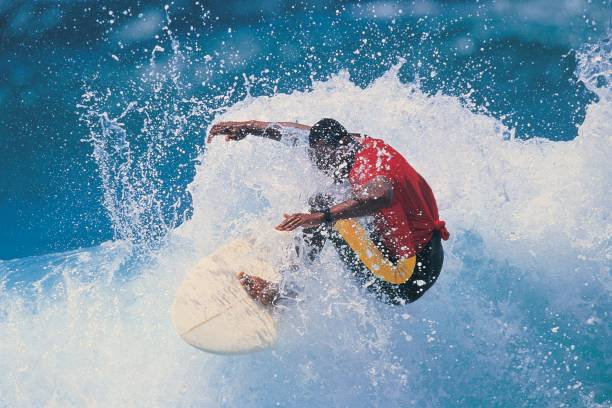
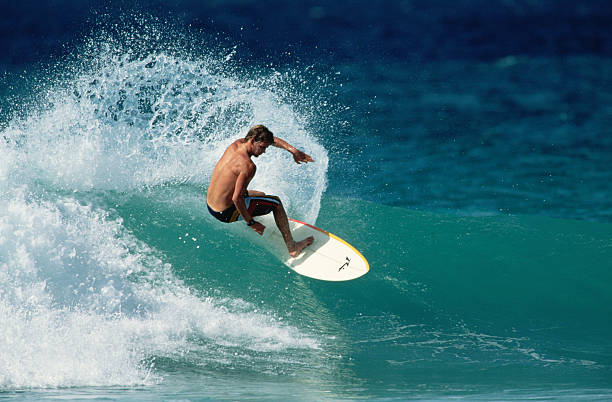
There was a time when “gnarly” meant something a little twisted, a weird knot in a piece of driftwood, or maybe a funky bump on your board. But out in the lineup, that word got a whole new life. It became the secret handshake for the kind of wave that makes your stomach drop and your heart jackhammer at the same time. When a surfer looks out at the horizon and mutters “that’s gnarly” under their breath, they ain’t talking about a cute little beach break with friendly shoulders. They’re talking about consequence, about a liquid wall that will either gift you the ride of your life or slap you so hard you forget your own name. And we wouldn’t have it any other way.
Gnarly is that weird cousin of scary and beautiful. It’s the wave that breaks over a knife-edge reef, with a lip so thick and hollow you could park a dump truck inside it. It’s the spot where the ocean decides to flex every muscle it has, tossing out an eight-foot slab with the ferocity of a slammed door. You watch a wave like Teahupoo from the channel and you get this strange mix of awe and nausea. The water turns from blue to glassy green, then goes dark as it pulls up a curtain of pure energy. The critical section throws itself out with a hinge of whitewater that sounds like a freight train hitting a wall. And the surfer who drops in? They’re not just riding a wave. They’re making a deal with the ocean. That’s gnarly.
But here’s the thing about the term: it ain’t just about the wave itself. It’s about the whole experience. A gnarly wipeout is when you get caught in the washing machine, then rag-dolled across the reef, then held down long enough to start counting your regrets. A gnarly paddle-out is when the channel looks calm from the beach but turns into a washing machine once you’re in it, and you’re taking sets on the head with your board leashed to your ankle like a stubborn dog. Even a gnarly dawn patrol can happen when the wind swings offshore and the tide pulls out, turning your local sandbar into a shifty, slabby nightmare that peels in shallow water and backwashes weird. Surfers sprinkle the word like salt on any situation that pushes past comfort and straight into the wild.
Now, let’s talk about the chargers. The ones who look at a gnarly wave and think, “Yeah, I’ll go.“ They’re not reckless, not exactly. They’ve studied the reef, the tide, the swell direction. They’ve mapped out the exit, the shoulder that might let them wiggle free if the barrel closes. But there’s a point where all that studying gives way to pure instinct. You paddle in, feel the wave lift your tail, and suddenly the world narrows to a single line of water. The drop is vertical, the lip is heaving, and the sound is a roar that drowns out every thought in your skull. In that moment, you’re not thinking about the word “gnarly.“ You’re living it. The takeoff, the compressed second where you’re fully committed, the boot of whitewater racing to meet your heels. If you make the barrel, you come out screaming with your arms overhead, salt burning your eyes, your heart trying to escape your chest. If you don’t, you eat it. And eating it in a gnarly spot isn’t just a wipeout. It’s a prayer, a reminder that the ocean always has the final say.
The beauty of gnarly is that it’s relative. For a kid on a foamie, a chest-high shore break with a bit of punch is gnarly. For a big-wave veteran, gnarly might mean forty feet at Mavericks with the tide pulling the plug. That’s the thing about the surfing world: we all get to choose our own level of gnarly. And we respect anyone who pushes their own edge, as long as they’re honest about it. There’s no faking gnarly. The ocean doesn’t care about your instagram repost or your sponsor sticker. You either step up or you stay in the channel. And both are okay. Because the channel is where you find the surfers who know their limits, who watch the set roll through and say “nah, not today.“ That’s wisdom, not fear. And when they finally do paddle in, they’re not just chasing the wave. They’re chasing the moment where everything else falls away, leaving nothing but the raw, unscripted, gloriously terrifying present.
That’s what gnarly truly describes, my friend. Not just a wave or a trick or a wipeout. It’s the whole spectrum of extremes that the ocean throws at us, and the way we rise to meet it with a grin that says “I’m scared, but I’m here.“ So next time you see a slab that looks like it’s been sharpened by a knife, or a local charger pulling into a pit that defies physics, tip your hat and say “gnarly.“ Because that word carries a lifetime of salt, a dozen scars, and the deepest respect you can pay to the sea. It’s the ultimate compliment, the surrender to the wild. And it sounds way better than “intense” ever will.