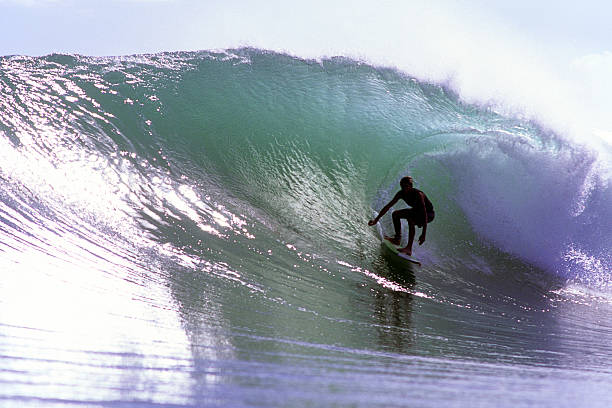
Long before hashtags and board shorts became fashion statements, there was a lone figure on the south side of Malibu who rode waves with a style that made the ocean feel like a secret. That figure was Miki Dora, a man so allergic to the spotlight that he spent his whole life diving deeper into surfing’s shadows. He wasn’t a hero in any usual sense—no trophies, no endorsement deals, no screaming fans. He was the anti-sellout, the surfer who looked at the commercial wave of the 1960s and said, “Nah, brah, I’m out.“ His whole existence was a quiet rebellion against every kook who turned riding waves into a popularity contest.
Dora came up as a grom in the golden age of Malibu, that holy point break that still draws longboarders like magnets. He watched the old pioneers wrestle their heavy redwood planks, then refined it all into pure elegance. He rode a hotdogger style, nose-riding with such casual grace that others looked like they were fighting a beast. He could hang ten for an entire wave, body still as a statue while the board hummed underneath him. He never thrashed or flailed. He just flowed, like water sliding over water. That flow made photographers like John Severson and Bruce Brown want to shoot him, but Dora had a weird relationship with the camera. He’d show up late, steal the best waves, and paddle off before anyone got his name right. He wasn’t a model. He was a ghost stealing peaks, and that’s exactly how he liked it.
When surfing went mainstream with “Gidget” and endless bikini flicks, Dora’s disdain sharpened like a reef at low tide. He saw the stoke being packaged, waxed, and sold to tourists who couldn’t tell a point break from a parking lot. So in 1967, he dropped the bomb that rattled every fin box from California to Australia: “Dora’s Deviant Ways” in Surfer magazine. That article shredded the industry, the magazine itself, and every kook who sold his soul for a free sticker. He called out surfers who cared more about their hair than their bottom turn. It wasn’t just a rant; it was a declaration of independence from the pack, and it still echoes in every soul surfer who paddles out at dawn to escape the noise.
Then Dora vanished. He bounced around the globe on a fake passport, living off the grid and ripping waves in the most unlikely places. He was the original wave chaser, but not the kind who sells you a logo. He was the kind who disappears into a foreign port, sleeps on the sand, and greets dawn with a single paddle. He traveled through Europe, Africa, and even the Middle East, always alone, always looking for that empty right-hander with no soundtrack or sponsor. Some say he was running from bad checks and credit card scams. Others say he was just running from the crowd. Honestly, both are probably true. But that’s what made him the Da Cat—untouchable, unlabeled, and utterly committed to the curl.
Later, Dora returned to California, older and still refusing to bow down to the nostalgia industry that wanted to turn him into a T-shirt. He even criticized the soul-surfing movement that claimed him as a patron saint. That’s how much he hated being pinned down. When he died in 2005 from pancreatic cancer, the surf world lost its last true maverick. No contest trophy, no hall of fame plaque, just a thousand whispered stories about a guy who rode like a dream and lived like a siren.
What makes Dora an icon isn’t his board or any trophy wall. It’s his refusal to participate in the game. He proved that the best surfer isn’t the one with the biggest entourage, but the one who catches a wave completely alone, without a single witness, and still feels the stoke. So next time you’re riding a glassy dawn patrol and you see no one else out, think of the Black Knight. He’s laughing at the sellout circus from the biggest break in the sky, still hanging ten on a ghost of a wave, still telling everyone else to get lost.