There’s nothing quite like the feeling of rolling into the airport with a board bag slung over your shoulder, the promise of clean lines and tropical water burning a hole in your soul. But man, if you’ve ever stood at the check-in counter watching the airline agent’s eyebrows lift when they eyeball your bag, you know the buzzkill is real. Packing a travel surfboard bag is a rite of passage for any globetrotting surfer, and getting it wrong can mean busted rails, cracked decks, and a wallet that’s suddenly lighter than a foamie in a shorebreak. So let’s chop it up about the subtle art of stuffing your quiver for a surfari without getting bent over by baggage fees or, worse, showing up to a perfect set with a board that’s more dinged than a well-loved log.
First things first: the bag itself. You can’t just grab any old soft sack from the back of your truck and expect it to survive a cross-Pacific haul. A proper travel bag should have at least ten millimeters of padding, preferably with extra reinforcement around the nose and tail zones. Those are the spots that take the most abuse when your bag gets tossed around like a rag doll in the cargo hold. Some dudes swear by the coffin-style hard cases, but they’re heavy, awkward to lug, and unless you’re hauling a fleet of custom shapes, they’re overkill for a quick trip. A quality padded bag with a good zipper and compression straps is your ticket. Pro tip: always leave a little slack in the straps so the bag can expand if you’re jamming extra gear in there with the boards.
Now, how many boards should you bring? That depends on where you’re headed and how much punishment your wallet can take. Most airlines charge a flat fee for a board bag, so it’s tempting to cram in three or even four sticks. But here’s the thing: more boards means more weight, and weight over fifty pounds will get you hit with an overweight charge that can rival a dinner at a fancy beachfront restaurant. Stick with two boards if you can swing it. One for the wave of the day, something like a solid step-up if you’re chasing bigger waves, and one groveler or fish for those mushy, onshore days. If you absolutely need a third, use a smaller shape like a twin-fin or a quad that sits between the other two like a sandwich. Wrap each board in a towel or a wetsuit to create a buffer. Speaking of wetsuits, that’s your best friend for padding. Roll ‘em up and stuff them along the rails and between the decks. They absorb shock, keep the boards from rattling, and also free up space in your regular luggage so you don’t have to carry a separate duffel.
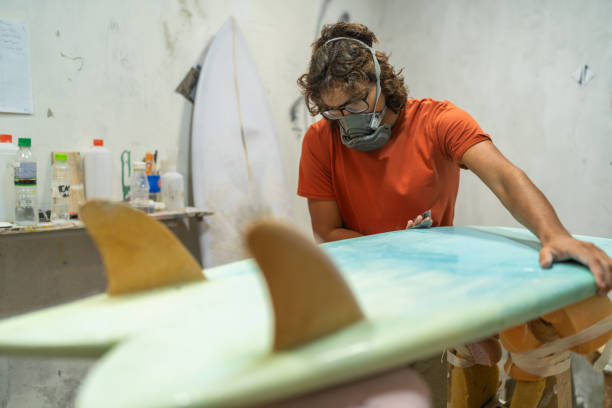
Let’s talk about the delicate bits: fins. Don’t leave the fins in the boxes. I know it’s a pain to unscrew them, but if a fin gets torqued during turbulence, it can crack the fin box or punch a hole clean through the board’s deck. Wrap each fin in a sock or a piece of neoprene and tuck them in a separate pocket or a corner of the bag. For thruster setups, you might even tape the fin cluster together and place it in a small pouch. And whatever you do, don’t put your fins in your carry-on unless you want the TSA to pull you aside and ask why you’re traveling with three sharp objects that look suspiciously like shanks. It happens.
Wax. Leave it at home. Traveling with a big chunk of sticky surf wax in a hot cargo hold is a recipe for a melted mess that gets smeared all over your bag, your boards, and your clothes. If you need wax at your destination, buy it there. Every surf town on the planet has a shop that sells the stuff. If you absolutely must bring a bar, keep it in a sealed plastic bag inside a hard container. Still risky. My rule: just buy local. Support the surf economy.
Another huge mistake is forgetting to bring a ding repair kit. Even with the best packing job, boards can take hits. A small tube of surfer’s putty or a UV-cure resin stick can save a trip. Throw it in an outer pocket of the board bag. Also throw in a roll of gaffers tape. It’s waterproof, holds tight, and can patch a stress crack or a popped rail long enough to get through a session. And don’t forget a fin key. You’d be amazed how many surfers show up without one and then have to borrow from a stranger on the beach.
When you’re closing up the bag, do a final check on the zipper. A busted zipper halfway through your travel day means you’re hiking through the terminal with your boards half-exposed. Use a small padlock or zip tie to keep the zipper pulls together. Some airlines require that the bag has a handle and that it’s clearly labeled with your contact info. Slap a luggage tag on it, and write your name and phone number in permanent marker on the inside of the bag too, just in case the tag gets ripped off.
Finally, arriving at your destination. Don’t just toss the bag in the back of a rental and drive off. Open it up at the airport or the car rental lot, give each board a quick once-over, and check for new dings. That way if something got broken, you can file a claim right then and there. Most airlines have a short window for damage claims. After that, you’re on your own.
Packing a travel board bag is like paddling out at a crowded lineup: you gotta be patient, smart, and ready for anything. Treat your boards with respect, keep the weight down, and use your softest gear as padding. A little planning goes a long way toward making sure your surf expedition starts with stoke, not stress. Now go chase that endless summer.