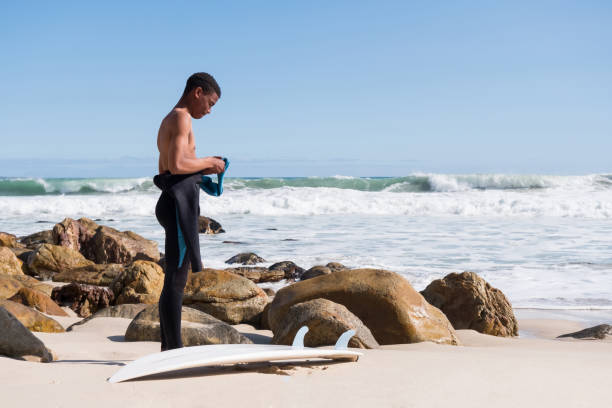
There’s a moment every surfer knows too well. You’re suited up, waddling down the sand like a penguin with a board under its arm, and that first splash of Pacific hits your ankles. You pause. The chest zipper pulls a little tighter. You take a breath and dive in. For the next two hours, that rubber suit is your only shield between you and the ocean’s mood swings. So how do you pick the right one? It ain’t just about the temperature on the car thermometer, brah. It’s about the magic numbers on the back of your neck – the thickness.
The classic wetsuit comes in millimeters, like a stack of pancakes. A 3/2 means three millimeters over your torso and two over your legs and arms. That’s your spring and autumn staple, the go-to for water temps between sixty and sixty-five degrees. It keeps your core warm while letting your limbs bend like a willow. Then there’s the 4/3, the all-around warrior for most cold-water spots like Northern California or Japan, handling temps from fifty-five to sixty. Bump up to a 5/4 with a hood for the deep freeze, anything below fifty. That’s when you start feeling like a knight in rubber armor, but the extra warmth is worth every ounce of stiffness. A 6/5/4 with booties and gloves is for those polar surfers chasing October swells in Iceland – respect to them, but most of us won’t go there.
But here’s the kicker – thickness ain’t the only variable. Fit is the unsung hero. A wetsuit that’s too baggy lets water flush through, churning your body heat right out to sea. Too tight and you’ll feel like a sausage casing, cutting off circulation and making every paddle a battle. You want a snug hug, like a good friend who doesn’t want to let go. The shoulders should grip, the torso should compress just a touch, and your ankles and wrists should have a tight seal. If you can pinch more than a centimeter of neoprene at your lower back, it’s too loose. Try a different brand, too – Japanese suits fit differently than Australian ones, and European cuts are their own animal. When you find that perfect fit, you’ll forget you’re wearing it. That’s the goal.
Now, let’s talk zippers. The old back zip is the grandpa of the game – easy to get in and out but prone to flushing water down your spine like a miniature river. The chest zip is the modern favorite, keeping a solid seal across your back and reducing that involuntary shiver every time a wave slaps you. Some high-end suits even go zipperless, pulling over like a giant rubber T-shirt. These are the Cadillacs of flexibility, but they’re a workout to get on. For all conditions, though? I’d take a chest zip any day. It’s the sweet spot between warmth and ease. And look for a chest zip with an internal key pocket – trust me, you don’t want to lose your car key between sets.
Booties and gloves aren’t optional when the mercury dips. A 5/4 without booties is like surfing with ice cubes strapped to your feet. Go for 5mm booties with a soled bottom and a good tread for the rocks. Gloves are a personal call – some surfers hate losing finger dexterity, but when the hands go numb, you can’t grip the rails. I go with 3mm “mitts” that split for your index finger and keep the rest together – weird but warm. And a hood? That’s the game-changer. You lose a ton of heat from your noggin, and a 2mm hood can make a 4/3 feel like a 5/4. Don’t be a hero. If the water’s below fifty-eight, grab the hood. Your ears will thank you after the third duck dive.
Material science has changed the game too. The old school limestone neoprene is more eco-friendly than petroleum-based, and it’s just as warm. Some suits have thermal lining like a fleece jacket inside, trapping micro bubbles against your skin. Others use a super-stretch Japanese rubber that feels like a yoga outfit from the high country. For all conditions, look for a suit with at least a few features: a slick skin outer layer that blocks wind, a glued and blind-stitched seam construction to keep water out, and taped seams at the stress points like shoulders and knees. These little details separate a good session from a hypothermic disaster. And don’t forget the strategically placed drainage holes in the lower legs – you’d be amazed how much water a good flush valve can let out before you paddle back out.
One more thing – layering. When the water temp swings during the shoulder seasons, a 4/3 plus a sleeveless 2mm vest underneath gives you that extra core warmth without buying a whole new suit. It’s like a secret weapon for the all-condition surfer. You can also wear a thin rash guard under a spring suit to add a touch of warmth and keep the neoprene from chafing your armpits. Versatility beats owning a quiver of suits on a budget. Choose one good suit that covers the range, then adapt with the add-ons.
Finally, take care of your rubber. Rinse your suit with freshwater after every surf, hang it in the shade, and never wring it out. A wetsuit is a delicate beast. Treat it like your favorite board, and it’ll last you years. When the rubber starts to delaminate or the seams crack, it’s time to retire it to the quiver of memories. So next time you check the swell, check the water temp too. Match your thickness to the ocean’s mood, get the fit dialed, and keep your seals tight. Then you’ll be surfing fearless from the tropical lineup to the frigid point breaks. The ocean doesn’t care about your style, but your wetsuit does. That’s the golden rule.