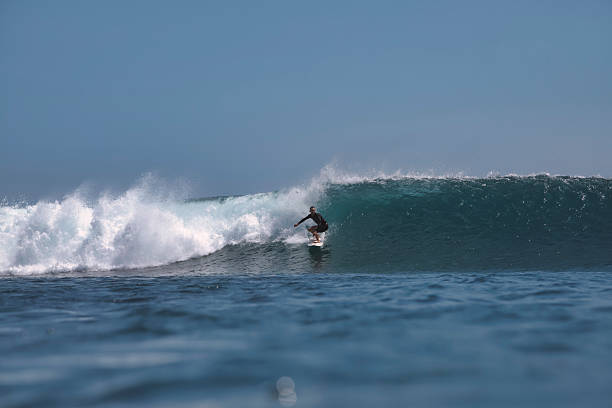
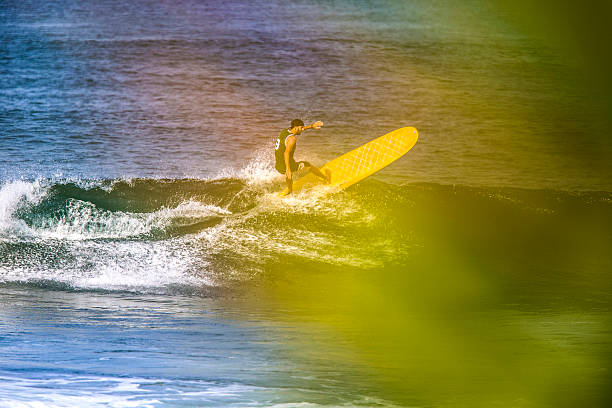
There’s nothing quite like the last ten minutes of a surf heat. You’ve been paddling, jostling, and scratching for position through the middle lull, watching the ocean like a hawk on Adderall, and now the clock is ticking down like a heartbeat you can feel in your eardrums. The ocean doesn’t care about your scorecard. She just keeps breathing sets through, some long and fat, some steep and mean, and every single wave that rolls under your board becomes a potential redemption or a missed connection. As a competitor, you learn to live in those final minutes. You learn to read the horizon with your chest pounding and your throat dry, while the announcer’s voice crackles over the loudspeaker with the kind of casual urgency that makes you want to scream. Stoke is one thing. This is pure, unadulterated chess on moving water.
Wave selection is everything in that last push. The veterans will tell you that you don’t just surf a heat, you manage it. Early on, you might blow your wad on a mediocre left just to get something on the board, but as the clock winds down, you start drawing lines in the sand with your mind. The scoring criteria rewards commitment, power, and innovative maneuvers, yet the real trick is knowing which wave to let go. A set wave with a squaring up peak might look tempting from the outside, but if it closes out on a dry reef, you’re not scoring anything except a ticket to the beach. So you learn to fade, to shuffle your board sideways, to read the telltale darkening of the water as the swell lines march in. Patience becomes your best friend, but patience with a pulse. You don’t want to paddle, you don’t want to spin, you just want to feel the set approach and then make that split-second decision to commit all in.
Then there’s the matter of priority. You feel like you own the peak when you’re sitting closest to the pocket, that little spot where the wave first starts to unload. Priority is the golden ticket, but it’s also a trap. Some guys get so greedy protecting their position that they forget to actually catch anything. They let wave after wave roll by, watching their backup wave score get massacred by a better performer on the inside. The smart surfer in the final ten minutes knows that priority isn’t just about the next set. It’s about using that pole position as a psychological weapon. You let the other surfer think you’re going to take every wave, so they drift too deep or too wide, and then you swoop in on a clean shoulder you had your eye on all along. That’s the art of deception. The ocean rewards those who think three moves ahead, not just the ones who paddle the hardest.
The physical grind of those last minutes is gnarly too. Your arms feel like noodles soaked in saltwater, your lungs burn from constant duck dives, and the sun beats down on your neck like a slow roast. But that’s when your brain switches into a different gear. You remember every score you’ve earned, every wave you’ve caught, and you start calculating combinations in your head. If I need a seven, I can’t just do two turns on a mushy closeout. I need to find a hydraulic bowl that gives me a full barrel exit, maybe a big carve on the end section, and hold my rail through the foam ball. That kind of vision is what separates the shredders from the champions. You start talking to yourself between breaths, a quiet mantra of “stay deep, stay patient, trust your fins.“ The crowd on the beach becomes a blur of beach towels and sunscreen. All you see is the next set line and the lineup shifting beneath you like a living organism.
And then there’s the pure, primitive fear of the last wave. You might be sitting in the lead, needing only a small score to cement your win, and you pick a wave that isn’t quite right. Maybe it’s a fat lumpy thing that jacks up too slowly, and you find yourself in the wrong spot, the lip throwing you into a wild freefall. Wipeouts in the final ten minutes are brutal because they cost you time, energy, and sometimes your board. You dig your fins in on the bottom turn, you stall off the top only to get smoked by a wall of whitewater. The horizon spins around you, the reef gets close, and for a second, you think about the heat more than your own safety. That’s the real thrill of competition. It’s not about style points or posturing on the podium. It’s about making the absolute most of a handful of fleeting moments when the ocean offers you a gift, and having the balls to take it even when everything inside you says to bail.
In the end, the final ten minutes of a surf contest are a distilled version of life itself. You get a limited number of waves, you don’t always get to choose which ones come, and you have to turn uncertainty into action. Some days the ocean flatters you, feeding you perfect a-frames right on queue. Other days she starves you, leaving you with nothing but a couple of shoulders and a broken heart. But you paddle out anyway, because that’s what surfers do. You chase that last set, you pull into that last barrel, and you let the scoreboard worry about itself. When the horn blows, you know you gave those ten minutes everything you had. And that, my friend, is more satisfying than any perfect ten-point ride.