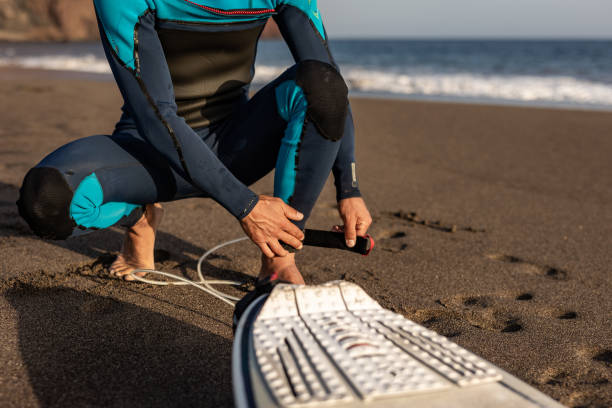
Every surfer knows the feeling. You’ve got a wetsuit that’s been with you through thick and thin. It saw you through that legendary dawn patrol at Lowers. It took the brunt of a coral reef in Indonesia. It smells like a wet dog that rolled in baitfish, but you love it. Then, one morning, you’re zipping up and a split appears under the arm. Or the glued seams just let go. You feel a pang of loss. But here’s the dirty truth that nobody likes to talk about in the parking lot: what happens when you throw that suit away? It’s the silent shocker of the surfing world, and it is time we paddled out and faced the wave of wetsuit waste.
That old, crusty neoprene is not heading to a threadbare Valhalla for surfing legends. It is heading to a landfill, where it will sit for several hundred years. Most wetsuits are made from petroleum-based neoprene, which is basically glorified synthetic rubber. It’s tough, flexible, and keeps you warm, but it is also a plastic product. When you trash it, it doesn’t biodegrade like a cotton towel. It just hangs out in a big pile, leaching chemicals and laughing at the recycling bins. For a culture that lives for the purity of a glassy morning wave, that is a total bummer.
The good news is that the stoke is shifting. The wave of sustainability is starting to crest, and some rad companies are getting the picture. The first big push came from the material itself. Brands started playing with limestone-based neoprene, ditching the petroleum. That was a step up, but the real breakthrough is coming from the recycling side. Programs like Patagonia’s Wetsuit Forge and Siren’s closed-loop system are changing the game. Instead of tossing your busted 4/3 into the dumpster, you send it to them. They shred it down, strip the impurities, and press it into fresh neoprene sheets. They’re essentially taking the carcass of a dead wetsuit and giving it a new life as a leash, a bootie, or even a fresh suit. It’s a kind of surfboard karma.
But the most important piece of the puzzle is the surfer on the beach. You. The culture of swapping, repairing, and recycling is ancient in surfing. We already keep our boards longer than they should be liveable. We reglass dings until the ding repair weighs more than the blank. Why should the wetsuit be any different? There is a growing movement of folks who are mending their own seams with neoprene cement and a patch of old sock material. They’re cutting a 6mm winter suit down into a spring suit when the shoulders blow out. It’s a mental shift from a disposable culture to a regenerative one. Instead of seeing a torn wetsuit as garbage, you see it as raw material.
There are also some clever DIY tricks floating around the lineup. Old, thin wetsuits make killer knee pads for fixing the car, or even covers for your surfboard fins to keep them from chipping. The zippers alone are worth saving—they can be swapped into a new suit if you find a good deal on a secondhand one that’s missing a zipper. And don’t even get me started on the patch potential. If you’ve got a hole in the butt of your suit, cut a circle out of an old rash guard, glue it on, and you’re back in the water for another season.
The true soul of surfing is not about having the shiniest new gear. It’s about the connection to the ocean. That connection comes with a responsibility. We can’t keep treating the ocean like a dump for our old neoprene. The waves are not going to get better if we are turning the Earth into a landfill. So the next time your favorite suit gets a fatal rip, don’t toss it in the rubbish. Patch it, recycle it, or pass it to a buddy who runs cold. That old wetsuit has another wave in it somewhere. It just needs a little love and a new direction. That is the real endless summer attitude: respecting the source and riding the green foam.