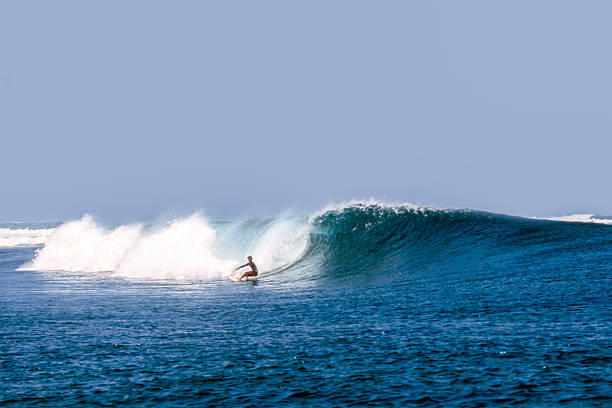
You ever see a local glide across the whole wave with zero fuss, never losing the pocket, making every section look like a ramp built just for them? That ain’t luck, brah. That’s the pump in its purest form. It’s the unsung hero of surf actions, the bread and butter hidden between dramatic turns and airs. While everyone’s chasing the gnarliest snap or deepest tube, the pump is what ties it all together. It’s the rhythm, the heartbeat of your ride. Without it, you’re just a passenger. With it, you become the conductor.
So what the heck is a pump? Simply put, it’s a series of subtle weight shifts and rail adjustments that turn your board’s angle and the wave’s upwelling energy into forward speed. Think of it as pumping a swing. You lean back on the drive off the bottom, then compress and unload as you hit the lip, but instead of exploding into a turn, you keep it tight, redirecting that push straight down the line. The result? You gain speed without kicking your legs. You turn the wave’s own power into your personal velocity.
The key to a solid pump is staying in the pocket – that juicy part of the face. When you’re positioned right, you feel the board start to glide. That’s your cue to drop your back foot and push through your front, loading the rail. Then as you sense the board riding up a few inches, ease off, shift your hips back, and let the tail release, pointing your nose down the line. That transition from load to release is the pump. Do it two, ten times, and you’ll feel your fins humming with speed.
The pump isn’t just about raw speed, though. It’s about flow. It keeps you connected to the wave’s rhythm, allowing you to set up for a radical fade or a backhand rip. Pros make it look invisible because they’ve melded it into every action. Watch John John Florence on a long left – every little push is a pump, even between turns. He’s not just drifting; he’s actively managing velocity and line. That’s mastery. It’s all about the glide.
Now, there’s a difference between the cruise pump and the speed pump. The cruise pump is for a mellow wall, just to keep moving. The speed pump is more aggressive – you’ll see it on slabbing waves, where you need maximum momentum. Both share the same principle, but the speed pump involves bigger excursions up the face, more compression, and a sharper snap of the tail. It’s like shifting from third gear to fifth.
The pump also comes in handy on flat sections. Stuck on a soft shoulder with no obvious exit? Lay down serious pump energy. By pushing against the face and slingshotting off the bottom, you can cross a mushy zone and reach the next open face. It’s like running extra steps on a trampoline to gain height for a trick.
Learning to pump requires patience and a forgiving board. A longboard or funboard with volume is your best friend. You need to feel the board responding. Take a clean wave with a little shoulder. Stoke your glide, then try a single pump – drop that back foot, push off the bottom, redirect down the line. Don’t worry about style; just feel the surge. Once you get that rush, do it again. Then chain a few together. The ocean rewards the patient.
In the lineup, a proper pump can be your ticket to staying in the wave longer, linking sections that other guys miss. It’s also a sneaky way to maintain your priority – you can poke your nose around a section and still be in position for the next set. And when you merge the pump into a cutback or a snap, you’ll find your maneuvers carry twice the power because you’re not starting from a standstill.
So next time you paddle out, forget the airs for a second. Focus on the pump. Let it become second nature, like breathing. Feel that little thrust, that purr of your rails against the face. The realm of speed, flow, and endless smiles opens up right there. So pump on. The wave is waiting.