Rell Sunn was more than a surfer; she was the heartbeat of Makaha. Born in 1950 on Oahu’s west side, she grew up with salt in her veins and reef cuts on her knees. Her father was a beachboy at Makaha, and by age ten, Rell was already reading waves like poetry. But back then, the lineup was a boys’ club, and women had to scrap for every crumb of stoke. Rell didn’t just hustle; she redefined what a wahine could do on a board.
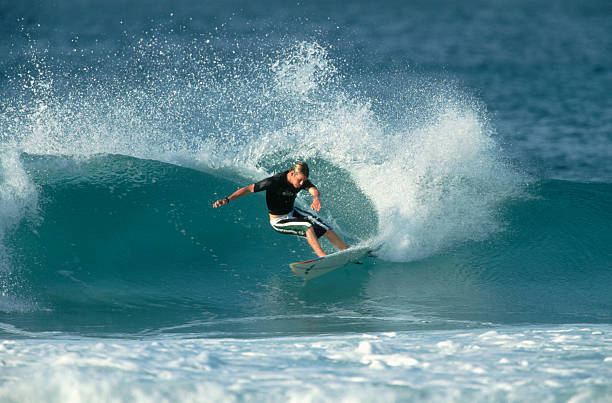
Her competitive rise was a thing of legend. She dominated the first Women’s International Surfing Championships at Makaha in 1975, taking the crown with an effortless grace that left the boys scratching their heads. She wasn’t just riding waves—she was dancing with them. Her style blended Hawaiian traditionalism with a raw, aggressive approach that was decades ahead of its time. Rell would read the swell from the channel, paddle into a set with a calm eye, and then unleash a series of carving turns that made the beach erupt. She won contests across Hawaii and California, but her real victory was in the water itself. She never let contest pressure dry up her flow. For Rell, surfing was pure aloha, a way to connect with the ocean and her ohana.
But life threw her a vicious left-hander. In 1982, doctors found breast cancer in her lymph nodes. Most people would have hung up their leash and retreated to dry land. Not Rell. She looked at that diagnosis like an unexpected close-out set and decided to paddle out anyway. She underwent chemotherapy, but she never missed a surf session. She’d get treatment, then wrap her head in a towel to keep the sun off her bald scalp and catch waves at Makaha. Her energy was infectious. She’d crack jokes, share her poi, and then carve up the face of a ten-foot wave as if cancer was just an annoying channel marker. She became a beacon for cancer survivors everywhere, proving that the ocean’s healing power could rival any medicine.
Rell’s contribution went beyond her own surfing. She founded the “Healing Wave” surf therapy program for cancer patients and at-risk youth. She dedicated her time to teaching keiki how to swim, how to read rips, how to respect the ocean. She also fought against localism, reminding the groms that the lineup belonged to everyone, not just the heaviest hitters. She took on the role of aunty to a generation of female surfers, including legends like Sunny Garcia and the Hobgood brothers, though her biggest heart went to the girls. She was the first woman to hold a lifeguard position on Oahu’s west side, saving countless lives and breaking down barriers in the process.
Her battle with cancer spanned twelve years. She went through three bouts, never losing that smile or that slow, melodic voice that calmed any surly crowd. She passed away in 1998, but her wave continues to roll. The annual Rell Sunn Menehune Contest at Makaha keeps her spirit alive, as does every young girl who paddles out with a stoke in her heart and the scent of plumeria in the air. She showed the world that being a wahine surfer wasn’t about being a novelty—it was about being a force of nature.
Her legacy is carved into the reef of surfing history. She wasn’t just a trailblazer; she was the entire path for countless women who followed. She proved that you could be tough and tender, competitive and kind, fierce and graceful all at once. Rell Sunn lived The Endless Summer every single day, chasing not just the sun, but the light within herself and others. Her story echoes in every female surfer who charges a wave without asking permission. It lives in the laughter of keiki learning to stand up, and in the quiet confidence of a woman paddling out alone at dawn. That’s Rell’s gift: a reminder that the surf is for everyone. So next time you see a woman drop into a slab with confidence and grace, give a nod to the Queen of Makaha. She’s still watching over that break, still smiling, still stoked.