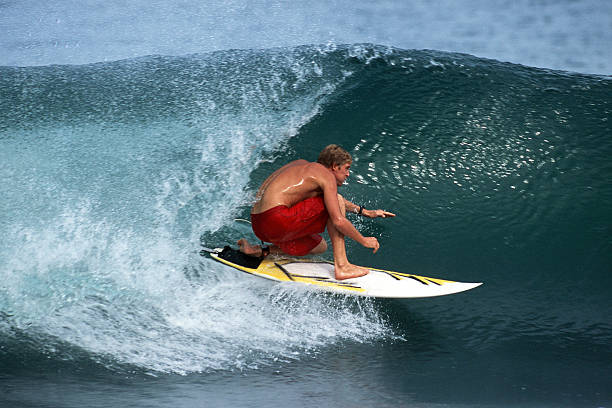
There’s a moment that separates the gnarliest wave-catchers from the paddling pack: that split-second when a lump of swell turns into a peeling face, and you’ve got to snap from a prone paddle to a bottom-turn stance faster than a barrel closes. That explosive pop isn’t just about arm strength or a lucky bounce. It’s about raw, twitchy power built in the sand, in the garage, and on the deck of your board. Most surfers focus on paddle endurance or core stability, but the real juice comes from plyometrics — the art of training your muscles to fire like a slingshot. If you want to turn from a mellow cruiser into a power-hungry pocket ripper, you’ve got to put some pop in your practice.
Think about it this way: every drop-in, every cranked cutback, every last-second slot toave a close-out demands a sudden burst of force. Your body has two types of muscle fibers — slow-twitch for long paddles and fast-twitch for explosive moves. Too many surfers live in the slow-twitch zone, grinding out laps in the pool or chugging through yoga flows. That keeps you in the lineup, sure, but it won’t help you launch off the bottom when the wave throws a section. Plyometrics train your fast-twitch fibers to recruit within milliseconds. The payoff? You’ll feel like your board is suddenly a surfboard instead of a longboard, ready to snap onto rail the moment you ask it to.
Start with the most surf-specific plyo move: the squat jump. Set your feet shoulder-width, drop your hips like you’re sitting in an invisible tub, then explode upward as high as you can. Land soft with bent knees and immediately sink into the next rep. The key is minimizing ground contact time — think of the sand as hot coals. That brief, violent push mimics the exact force you need to get from foam to rail during a steep takeoff. Do three sets of eight reps with full rest between sets, because you’re training power, not fatigue. If you feel that burn in your quads and glutes, you’re on the right track. Add a twist: jump with a ninety-degree rotation to simulate a bottom-turn escape, landing with your feet stacked towards your back hand. That rotation builds the oblique strength and reactive speed that makes your turns feel like they’ve got a turbocharger.
Then there’s the box jump, a classic that translates directly to the drive off the tail. Find a sturdy platform knee-high, and instead of stepping up, leap onto it with both feet. Don’t climb — explode. Feel that snap in your hips and ankles? That’s the same push you use when you stomp on the back foot to sink your tail and whip through a vertical snap. For an extra surf twist, do single-leg box jumps. Since surfing is a unilateral sport — you lead with your front foot or back foot depending on your stance — you want your legs to be strong and explosive on each side independently. Regular foot? Train your left leg to push water over the nose. Goofy? Your right side becomes your steering wheel. Single-leg jumps fix imbalances and give you that asymmetrical power that makes your cutbacks feel sharp like a finbox razor.
But don’t stop at your legs. Plyometric push-ups are a cheap ticket to explosive pop-up power. Drop into a push-up position, lower your chest to the sand, then push up with enough force that your hands leave the ground. Clap if you’re feeling spicy. That fast extension of your arms and shoulders translates directly to the slam of your palms on the board when you’re forcing your feet under you during a late takeoff. Pair that with a broad jump — leaping forward from a squat position like you’re trying to clear a tidal pool — and you’ve got a full-body explosive session that won’t take more than fifteen minutes. The beauty is it’s all bodyweight, so no gym is needed. Just a beach or a patch of grass and a hungry attitude.
Here’s the surfer’s secret to making plyometrics actually work: you’ve got to treat each rep like a wave. No lazy repetitions, no zoning out. Every jump should be a full-send attempt to soar higher, rotate faster, or land softer than the last one. Between jumps, take your time — walk it off, shake out your limbs, imagine the next section of the wave. That recovery is when your nervous system recharges and your muscles learn to fire on command. And don’t do plyos every day. Your body needs time to adapt, so hit them two or three times a week, preferably before a surf session or on a separate day. If you do them after a heavy paddle workout, your fatigue will murder the explosiveness you’re trying to build. Keep them fresh, keep them fast, and keep them focused.
The result? You’ll paddle into waves with a new kind of confidence, knowing that when the wave pitches, your body will respond. You’ll feel the pop from your ankles, through your knees, into your hips and spine, and out through your rails. That power doesn’t just help you catch waves — it helps you rip the throat out of every tide. So next time you’re sitting in the channel, glassy and clean with a set feathering on the horizon, remember that the pop you’ve been grinding for is already living in your legs. All you’ve got to do is let it explode.