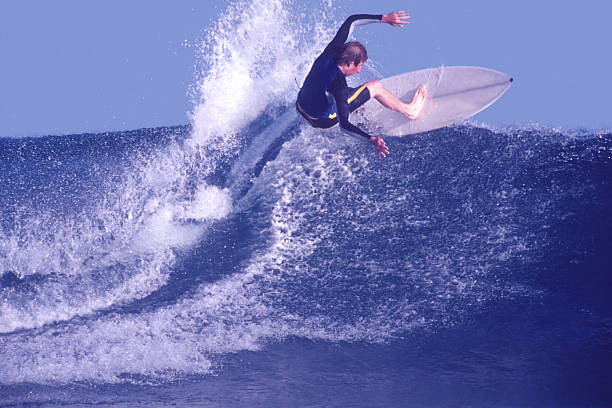
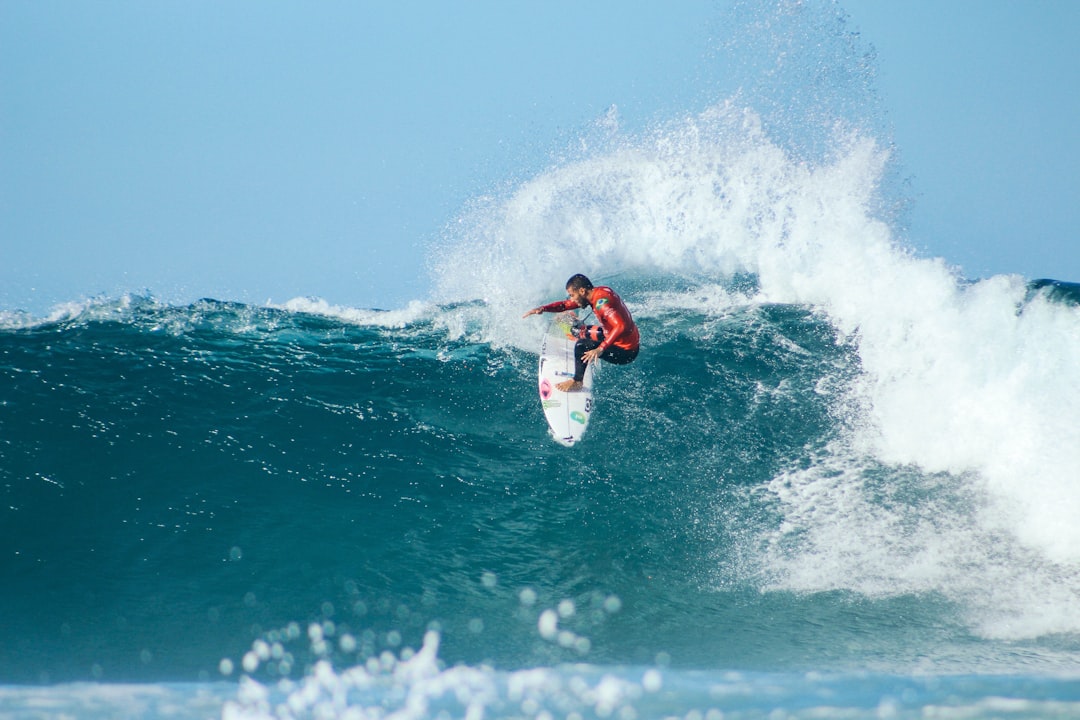
Everybody wants to be the first one up. You see it in the lineup all the time, that frantic energy when a set rolls through. A surfer pops up in a split second, knees to chest, board slapping down, and then they are either pearling straight into the foam or flailing off the back of the wave before they even get a chance to breathe. It looks fast, but it feels wrong. The secret to pop-up perfection is not about speed. It is about patience. It is about learning the power of the delay.
Think of your pop-up less like a jump and more like a slow unfurling. When you are paddling into a wave, that moment when the tail lifts and the nose points down the face is the most critical moment in the entire ride. The natural instinct is to panic. The wave is steep, the drop is long, and every fiber of your being screams to get your feet under you immediately. But that is exactly when you need to chill.
The wave is doing the work for you. When you are still lying on the board, you are a low, stable platform. The board is already taking the angle of the drop. If you try to pop up too early, you disrupt that natural trim. You lift your chest, your center of gravity rises, and the board stalls. Suddenly, that smooth drop turns into a vertical plummet, and you are either going over the falls or spinning out trying to catch up. The delay is about letting the wave catch you.
Here is the move. As you feel the wave lift your tail and you take that last hard stroke, do not rip your feet up immediately. Keep your chest down. Let your nose angle down the face. For just a fraction of a second, maybe a full second on a mellow wave, you stay glued to the deck. You feel the water rush past your rails. The board finds its line. This is the “pocket of the drop.“ It feels like the wave is holding you. Once you feel that stability, that moment when the wave is pressing the board into the face rather than leaving it hanging in the air, that is your cue.
Now, the pop-up itself. It should be one fluid, controlled motion. Drive your hips up, not your shoulders. Keep your head looking forward, not down at your feet. If you look at your board, you will twist your spine and throw off your balance. Look where you want to go, down the line. As your back foot comes to the tail pad, slide your front foot forward like you are stepping onto a skateboard. The whole movement is smooth, almost lazy. You are not jumping to your feet. You are rising to meet the wave.
This technique works on every type of wave. On a steep, hollow wave, the delay is critical. If you pop too early on a slab, you will freefall. If you wait that extra beat, the lip has time to throw over you, and you are already down in the barrel slot before you even stand up. On a fat, slow wave, the delay lets you save your energy. You do not need to muscle your way up. You wait for the wall to build, then you stand up into the power.
Every great surfer has this look of “slow motion” in their pop-up. John John Florence, Kelly Slater, they don’t look rushed. They look like gravity is irrelevant. That is the delay. It is the quiet space between the paddle and the stance. It is the difference between fighting the wave and flowing with it. So next time you are sitting out back, take a breath. When you paddle for that wave, resist the urge to rush. Let the wave take you. Wait for the push. Then, and only then, stand up. You will be amazed at how much more time you suddenly have. The wave feels longer because you stopped fighting the beginning.