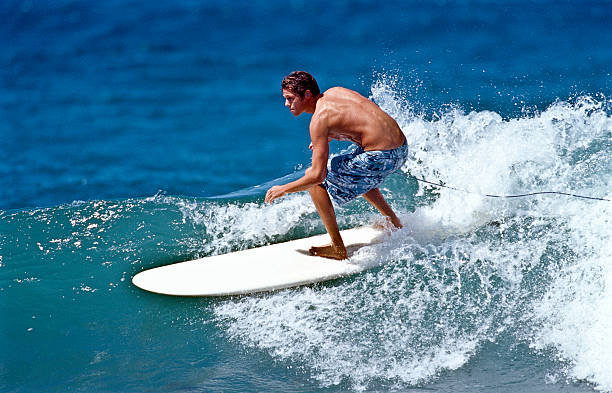
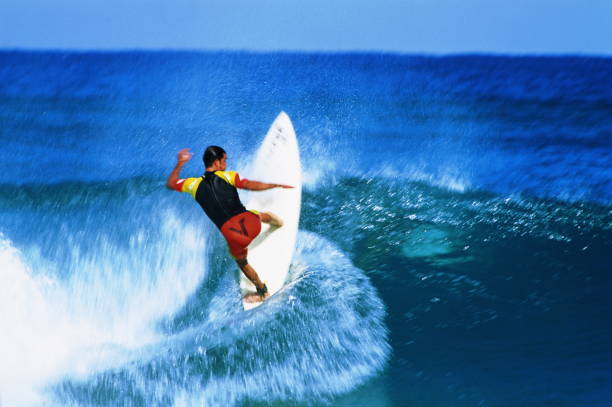
There’s a certain kind of electricity that crackles through the North Shore of Oahu every December when the waves at Banzai Pipeline start stacking up like freight trains. It’s the same feeling that’s been pulling surfers into that lineup for decades, a mix of awe and adrenaline that’s hard to put into words unless you’ve been there. The Pipeline Masters isn’t just another contest on the calendar. It’s the proving ground where raw talent meets liquid power, where the ocean decides who’s worthy and who’s just another grom hoping to punch above their weight.
The thing about Pipe is that it doesn’t play favorites. It never has. You can be a world champion or a local legend, but when that swell hits the reef, the wave doesn’t care about your resume. It’s that brutal honesty that makes the Masters such a spiritual experience for the surf culture and community that revolves around it. Every winter, the contest becomes a pilgrimage for those who understand that there’s something sacred in watching a human being drop into a hollow barrel that could easily snuff them out.
What’s always fascinated me, and what makes this event so endlessly captivating to the tribe of wave riders, is the tension that builds between the competitive structure of the contest and the untamed soul of the wave itself. The World Surf League tries to fit Pipeline into a box with points and priority calls and interference penalties, but anyone who’s paddled out at Pipe knows the ocean laughs at those rules. The thrill of competition here isn’t about beating the other guys in the heat. It’s about surviving the avalanche and coming out the other side with a smile that says you got away with something special.
That tension has sparked some of the most heated debates in surfing history. There was a time, not that long ago, when the judging criteria at Pipe heavily favored aggressive turns and vertical surfing over mind-bending tube rides. It felt wrong to most of us in the lineup. Telling a surfer to pump for a cutback at Pipeline is like asking a matador to put down his cape and do a cartwheel. The wave itself demands a certain surrender, a willingness to disappear into the maw of the beast and trust that the ocean will spit you out.
When the judges finally adjusted their criteria to give more weight to barrel riding, the entire energy of the contest shifted. Suddenly it wasn’t about who could throw the biggest spray. It was about who had the nerve to stay deep, to stall in that critical moment when the lip throws over your head and the entire world goes dark and quiet. That’s the real test of a surfer’s soul, and Pipeline Masters became the litmus test for courage in our tribe.
But even that evolution has brought fresh waves of controversy. Some purists argue that no contest format can truly honor the spirit of Pipeline, that the wave is bigger than any trophy or title. They point to the way the lineup changes from heat to heat, the way the crowd can influence a surfer’s choices, the way the reef claims its victims without regard for red jerseys or priority. There’s truth in that argument, the kind of truth that only comes from spending time in the water watching the generations roll through.
The beauty of the Pipeline Masters, though, lies in that very contradiction. It’s a contest that struggles against its own nature, a human attempt to measure the unmeasurable. Every year we show up knowing that the winner might not be the best surfer, but the one who read the ocean right on that particular day. That uncertainty keeps the stoke alive, keeps us all coming back to watch, to judge, to argue about who really earned that trophy. In the end, the contest is just an excuse to gather as a tribe and pay our respects to one of the most incredible waves on the planet. The thrill isn’t in winning. It’s in surviving the avalanche together.