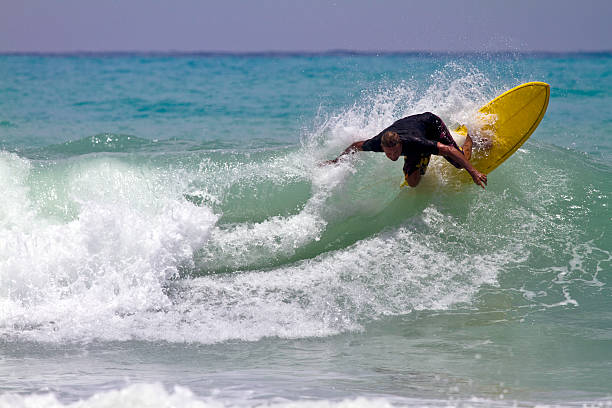
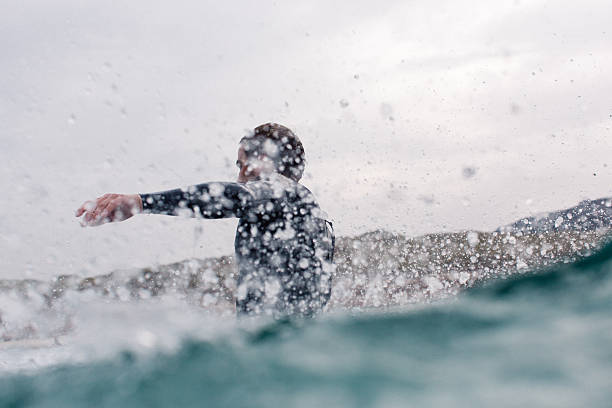
There’s a moment just before dawn when the trade winds die down, the ocean goes slick as a polished mirror, and the horizon line looks so sharp you could cut yourself on it. That’s the glassy period, and every surfer worth their wax knows it’s sacred. But glass isn’t the whole story. What really separates a shredable session from a closeout nightmare is the wind direction. Offshore winds are the unsung heroes of surf, the backstage crew that turns a mushy head into a grinning tube machine.
When the wind blows from the land out towards the ocean, that’s offshore. It pushes against the face of an incoming wave, holding it up just a little longer, sculpting the lip into a steep, hollow arc. Think of it like a gentle hand cupping the wave from behind, keeping it from crumbling prematurely. Offshore winds groom the surface, knocking down the chop and leaving a smooth, clean canvas. You paddle out, feel that cool air on your back, and you know you’re in for a treat. The wave stands taller, curls harder, and gives you that narrow, dark green tunnel you live for. It’s why spots like Pipeline and Teahupo’o are world-renowned—massive offshore influence.
Now, you flip the coin and you get onshore winds. That’s when the breeze blows from the ocean towards the land, right into the wave’s face. And brother, it does not do us any favors. Onshore winds tear the wave apart before it ever gets a chance to stand up. The face gets ruffled, choppy, and bumpy. The lip gets shredded into whitewash before it can even think about forming a barrel. The whole thing crumbles into a frothy, lumpy mess that makes for a bumpy, frustrating ride. Sure, you can still get out there on a longboard on a small onshore day and mush along, but you’re not gonna get that clean drop or that smooth carve. Onshore is for when you’re desperate, when the swell is big enough to overcome the chop, or when you just need to paddle out for the exercise. It’s not the wind of choice for any surfer chasing perfection.
But here’s the thing about wind and waves that a lot of beginners miss: wind direction isn’t static. It changes with the time of day, the season, and the local geography. A spot that’s firing at sunrise with light offshore breezes can turn into a mess by noon when the sea breeze kicks in. That’s why you’ll see old salts sitting in the parking lot, sipping coffee, staring at the horizon for twenty minutes before they even zip up their wetsuit. They’re reading the wind, watching the tops of the waves for that telltale spray. If the spray is coming off the top and getting blown back out to sea, you’re golden. If it’s blowing forward, onto the face, you might as well go find a river mouth or a point break that’s sheltered.
There’s also the matter of strength. A light offshore breeze, say ten knots, is magic. It grooms the wave, but it doesn’t tear it apart. A strong offshore wind, twenty-five knots and up, starts to do something else. It can actually hold the wave up too long, making it pitching and difficult to get into. It also creates a lot of wind drag on your paddle and your ride. Sometimes, the wind is so strong that you’ll get blasted down the line faster than you want, losing control. That’s when the wind becomes the enemy, even though it’s blowing from the right direction.
In the end, the relationship between wind and waves is a delicate dance. You’re looking for that sweet spot where the atmosphere and the ocean work together. When they do, you get those days that surf stories are made of—the ones where the water is a sheet of green glass, the waves stand up like a wall, and you can see the reflection of the clouds in the face as you drop in. That’s the endless summer feeling. That’s the wind at your back and the wave at your feet. So next time you check the surf report, don’t just look at the swell height. Look at the arrow pointing in from the land. That little arrow is your ticket to glory.