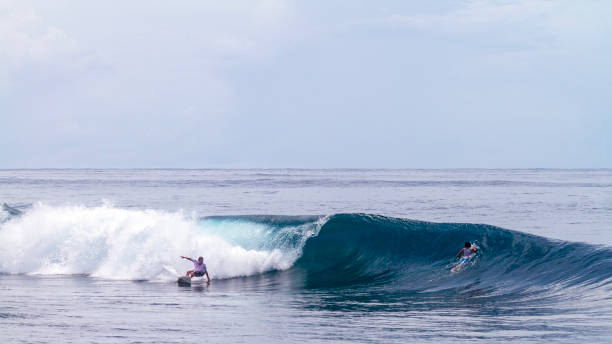
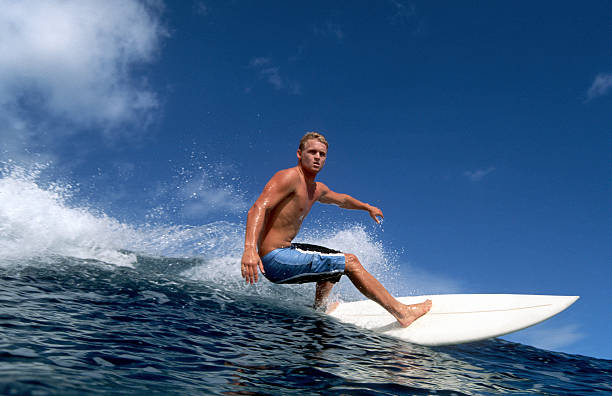
Every surf break in the world, from the pounding barrels of Pipeline to the mellow rollers of Malibu, has something unspoken humming beneath the surface of every set wave. This is not a physical thing written on a chalkboard or carved into a rock, but a deep, invisible matrix that holds the whole session together. It is called the lineup, but it is far more than the geographic spot where surfers sit and wait for waves. The lineup is a living, breathing social contract, a place where respect, patience, and raw ocean energy converge into a dance that every surfer learns to navigate, or else gets schooled in the most humbling way possible.
When you paddle out, you are not just entering the water. You are inserting yourself into a pecking order that changes with every tide, every swell pulse, and every shift of the wind. The lineup is the waiting room of the ocean, and the unspoken rule is that priority belongs to the surfer who is deepest, closest to the peak, and has earned their stripes. A beginner paddling straight into the inside zone and catching every crumbly little wave that comes through might not break any physical laws, but they break the spiritual law of the lineup. This is the cardinal sin known as snaking or dropping in, and it turns a peaceful session into a reef of tension faster than a rogue set wave.
The hierarchy of the lineup is not a rigid caste system, though many a kook has mistaken it for one. In its purest form, it is a meritocracy built on two things: skill and respect. The local surfer who has been surfing that same break for twenty years knows every trough, every rip current, and every subtle change in the sandbar. They have put in the time, and they have earned the right to the deepest position. But a visiting surfer with world-class talent who paddles into the spot with humble eyes and a quiet paddle can earn respect by taking their turns and acknowledging the locals. The language of the lineup is body language, a nod of the head, a quick hand signal, a holler of “Go, go, go!“ when someone else catches a gem.
Some of the most gnarly tension in the lineup comes not from big waves, but from bad etiquette. The drop-in is the great divider. When a surfer on the shoulder paddles for the same wave as the surfer deeper on the peak, they have crossed a line that cannot be uncrossed. This is not merely rude; it is dangerous. A drop-in can send two boards flying, crack skulls, and end sessions in blood. The smart surfer reads the lineup like a chessboard, watching where other surfers are positioned, seeing who is paddling for what, and waiting for their moment. The beauty of the lineup is that it is a self-regulating system. The ocean, that ultimate teacher, does not care about ego. A surfer who consistently drops in will find themselves suddenly alone, as everyone else moves to a different peak or just stops letting them catch anything.
For the surfer chasing the endless summer, understanding the lineup is as essential as knowing how to pop up or read a swell chart. It is the difference between a session that feels like a conversation with the ocean and one that feels like a brawl in a parking lot. The best lineups have a hum to them, a rhythm where energy flows freely. Surfers talk story between sets, share laughs, and then fall silent as a wall of blue rises on the horizon. The paddle battle for position begins, arms digging deep, lungs burning, but it is all done with a shared understanding that everyone out there is chasing the same stoke.
When you paddle out, take a moment to sit on the edge of the lineup. Watch. Feel the vibe. Learn who is deep and who is hungry. Acknowledge the locals with a simple nod. Wait your turn, and when you catch a wave, ride it with everything you have, not because you are trying to prove anything, but because you are part of something bigger than yourself. That lineup is a tribe, and the shared stoke of a perfect ride is what keeps us all paddling back out, day after day, chasing that feeling that is as old as the waves themselves.