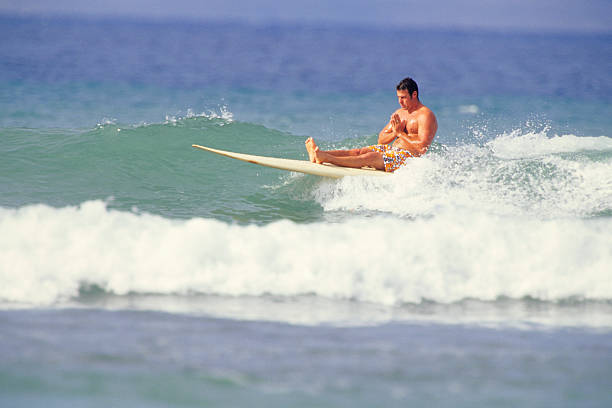
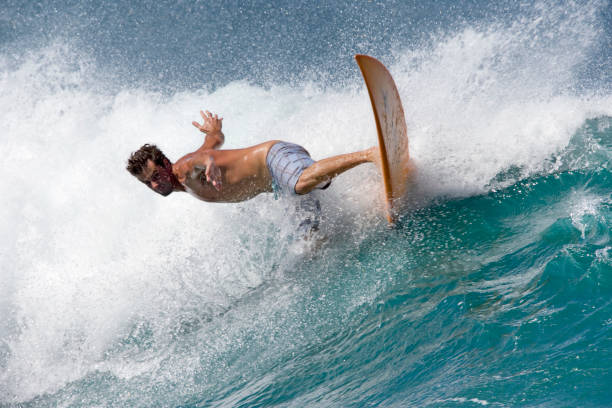
There was a time when a three-foot day meant grabbing the longboard or, worse, sitting on the beach with a lukewarm beer watching the closeouts roll through. Not anymore. The modern surfboard design boom has given us the groveler, that thick, short, wide-nosed rocket that turns mushy dribblers into racetracks. It’s the trickle-down innovation from high-performance surfing, but with a twist: instead of riding the pit of a barreling six-foot slab, you’re slashing the crumbly shoulder of a knee-high wave like it’s the Banzai Pipeline. And it all comes down to foam placement, rocker curve, and a whole lot of let’s-try-something-new attitude.
The groveler didn’t just appear out of thin air. Back in the late sixties and through the seventies, shapers like George Greenough and later Simon Anderson were already messing with shorter, thicker boards to unlock speed in underpowered surf. But the real explosion came with the computer age. CNC machines allowed shapers to dial in foam distribution with surgical precision. Instead of a standard, uniform outline, they could throw a ton of volume under the chest, keep the rails soft and forgiving, and squash the rocker so the board sits flat on the water. That means when you pump down the line in gutless surf, the board doesn’t bog or sink into a hole. It just rolls straight onto a plane and lets you generate your own speed. That’s the secret—speed from nowhere.
What really sets a groveler apart is the tail. Most grovelers run a wide, swallow or round tail with a stash of foam under the back foot. This give you that pivot point to throw the board sideways when a little ramp appears, but it also lets you keep a solid rail line through the dead sections. Pair that with a quad fin setup or even a thruster with slightly larger fins, and you’ve got a board that feels skatey yet glued. The innovation here isn’t just about size. It’s about rethinking the relationship between the bottom contours and the rails. Deep concaves running from the nose through the middle act like a rudder, channeling water and adding lift. Vee under the tail lets you roll off the wave face without catching an edge. Chined rails—those angled, carvy edges—help you transition from rail to rail at surfing speeds that would have seemed impossible on old-school potato chips.
Materials matter just as much. Epoxy and advanced fiberglass laminates have become the groveler’s best friend. These materials are lighter and stiffer, which means shapers can use that extra weight savings to add more volume without making the board feel like a boat. A six-foot groveler with 40 liters of volume used to feel like a door floating in the water. Now, with expanded polystyrene blanks and carbon stringer reinforcements, it feels like a high-performance shortboard that just happens to have a generous dose of float. You get the paddling power of a longboard and the agility of a hybrid fish. That’s pure innovation—the ability to cheat physics while keeping the stoke high.
But the groveler isn’t just for small waves. Riders have found that these boards work surprisingly well in waist-high slop, head-high clean waves, and even overhead just-before-the-storm sessions. The flat rocker means you can generate speed on flatter wave faces, but when you hit a section that stands up, the wide tail and deep concave give you enough hold to drive through a turn. It’s like having a cheat code for inconsistent surf. Surfers who once stayed home on tiny days are now out there in trunks, scoring fun little waves that feel like proper waves because the board lets you use the whole face. And that’s what modern design is all about—bridging the gap between what the ocean gives you and what you want to do on it.
The groveler’s rise also points to a bigger shift in surfing culture. We’re no longer obsessing over equipment that only works in perfect, overhead conditions. The everyday surfer lives in a place with average waves—maybe two to four feet, a bit lumpy, sometimes windy. Instead of fighting the ocean with a board that needs pitch and power, we’re embracing the same technology that top pros use for their airs and laybacks, just tuned for the lineup down the street. That’s a beautiful thing. The endless summer isn’t just about chasing barrels on the North Shore. It’s about that Tuesday dawn patrol when the tide pushes in and the waves are tiny but fun. The groveler makes every session count.
Shapers are still pushing the envelope. New tail configurations, step decks, and even modular fins are coming out every season. But the core concept remains: more volume under your chest, less rocker, wider tail, and a lot of confidence. Whether you call it a “round-nose fish”, a “mini-simmons”, or just a “daily driver”, the groveler has earned its spot in the quiver. It’s a reminder that innovation isn’t always about making things harder or sharper. Sometimes it’s about making things easier and more fun. Grab one, paddle out on a flat day, and feel the difference. You’ll never look at small surf the same way again.