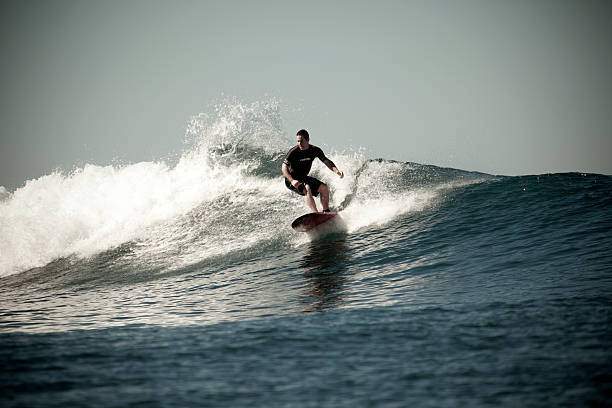
The bottom turn is the heartbeat of a good ride. Get it right, and the wave opens up like a secret door. Get it sloppy, and you’re stuck eating foam at the shoulder. Most groms think the bottom turn is just a simple pivot at the bottom of the wave, but those who’ve charged a hollow reef know it’s a moment of pure physics – a chance to load every ounce of your board’s energy into a coiled spring, ready to explode skyward. So before you even think about hucking a snap or digging a rail into the lip, you’ve got to master the setup. That’s the magic – the way you position your body, your feet, and your mind in those split seconds before the board carves.
Picture yourself dropping down a steep face. The wave’s energy is pushing you forward, and the bottom is rushing up fast. Your first instinct might be to brace yourself, but that’s exactly what kills the turn. Instead, stay loose. Keep your knees soft, your shoulders square, and your eyes locked not on your board but on the section ahead – the spot where you’ll initiate your next move. As you reach the trough, you’re not just turning; you’re compressing. Think of a loaded squat. Your hips sink, your back knee bends deeper than the front, and you feel the pressure build through your heels. This is where you set the rail – let the inside edge of your board bite into the face. But here’s the subtle part: you don’t slam it. You roll it in gradually, feeling the fins engage one by one. That’s called “trimming the rail” – you’re letting the water tell you how much grip you have.
Your back foot is the throttle. Slide it slightly forward or back, but keep the balls of your feet over the stringer. The exact placement depends on your board – a shortboard wants that back foot near the tail, a funboard asks you to move off the fins a bit. The key is pressure. Push through your back heel to turn, but shift your weight onto your front foot as you start the carve. This is the classic “pump” that builds speed. A bottom turn isn’t just a direction change; it’s a speed generator. If you do it right, you come out of the turn faster than you went in. That’s because you’re using the wave’s face as a wall, throwing your weight into it and letting the flex of your board rebound. Think of a skateboard pumping on a ramp – same deal, wetter.
The line you choose matters just as much as the pressure. Aim to turn at the very bottom, but not too deep – otherwise you’ll stall in flat water. Look for the peak of the wave’s curve, the steepest part of the trough. As you set your rail, keep your head and shoulders pointing down the line, not at the beach. Your shoulders lead the turn; your hips follow. If you look down, you’ll fall off. If you look at the lip, your body will naturally rotate toward it. That’s the setup for your top turn. So the bottom turn is never an end in itself – it’s a launching pad.
Here’s a pro tip: imagine a string tied to your front hip, pulling it slightly toward the wave’s face as you compress. That little extra twist gets your board on an angle early, keeping your fins biting through the whole arc. And don’t forget to breathe. It sounds silly, but holding your breath tightens your whole body. Exhale hard as you drive through the turn – it relaxes your knees and lets the board flex naturally.
Once you’ve loaded that spring, the release is automatic. As you hit the bottom and feel the board’s rebound, uncoil your legs, push your front arm up along the face, and let the fins do the rest. You’ll be flying.