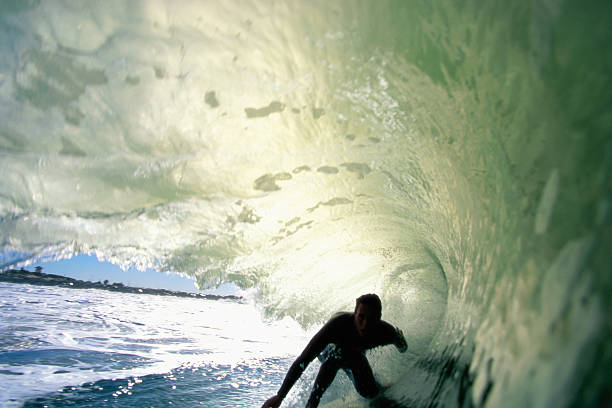
There are waves that make your heart skip a beat, and then there are waves that rearrange your entire soul. The Mentawai Islands have a way of doing both, but if you show up with nothing but a thirst for perfect lefts and a board under your arm, you might miss the real story. Sure, the swell there is otherworldly, the reefs are alive, and the lineups are so empty they feel like a secret the ocean forgot to share. But the true alchemy of that place isn’t just in the surf – it’s in the people who have called those jungle-covered islands home for centuries. To paddle out without acknowledging them is to ride only the surface of the experience. To really get it, you gotta sit for a while, watch the tide roll in, and let the culture wash over you like a warm, salt-soaked blessing.
The first time you see a Mentawaian elder glide through the shallows on a hand-carved board, you realize surfing isn’t just something they borrowed from the West. It’s something they remember. The way they read the ocean, the way they feel the pulse of the reef before the swell even shows its face – that’s a wisdom you can’t learn in a YouTube tutorial or from a retired pro coach. It’s written in the lines of their hands and the patience of their gaze. Spending time in a village, not just passing through for a photo op, offers a chance to witness rituals that have nothing to do with contest scores but everything to do with living well. There’s a slow, deliberate rhythm to their days – gathering sago, weaving palm fronds, sharing stories under the stars – that feels like the long-lost cousin of the surfer’s mellow pre-dawn paddle. The same stillness that fills your chest as you wait for a set breathes through their entire existence.
Getting invited into that world requires more than a wallet and a wide smile. It takes a serious willingness to listen, to set down your ego like a worn-out fin, and to embrace the concept of mata – not just as a word for an eye, but as a way of seeing. The locals have a deep, unspoken connection to the land and sea, a spiritual line drawn by ancestors who navigated these waters long before anyone dreamed of polyester boardshorts. When you ask permission to surf a break that’s part of their daily life, you’re not just claiming a wave. You’re asking to share a prayer. The hanua, or the village, has its own set of customs. Tattoos carved by hand aren’t decorative; they’re chapters of biography, maps of a life lived in harmony with nature. The way the women carry water, the way the kids laugh as they chase crabs – it all forms a rhythm that makes the world’s so-called modern surf culture feel noisy and rushed in comparison.
If you’re lucky enough to ride a thick, glassy slab during an afternoon session, and then later share a meal with a family who offers you their best fish despite having so little, you start to feel what true reciprocity means. The trade isn’t in money. It’s in respect. Giving back can be as simple as bringing fishing hooks, basic medical supplies, or a pair of reading glasses. It can also mean treating their shoreline with the same care you’d treat a fragile reef, packing out every piece of trash and refusing to support overcrowded boat operators who exploit the islands. The most stoked I’ve ever felt wasn’t on a 10-foot barrel at a secret spot. It was when an old man, after watching me fumble through a conversation in broken Bahasa, placed his hand on my shoulder and called me tulang – bone, as in family. In that moment, the waves didn’t matter anymore.
Cultural immersion through surfing is about letting the place change you, not the other way around. The Mentawai Islands will blow your mind with their otherworldly lefts and perfect tubes, but they’ll steal your heart with something far deeper. It’s the quiet sound of a village waking up, the smell of woodsmoke mingling with salt air, and the shared laughter that needs no translation. In the water, you’re a guest; on the land, you become a temporary part of a living tradition. So go ahead, chase the swell. But bring some patience, bring some humility, and most of all, bring an open heart. The best waves you’ll ever ride are the ones that stay with you long after the tide recedes, not because of their size, but because of what they taught you about the people who ride them with aloha in their blood. Stoke is universal – but the Mentawai way of living it? That’s a gift you’ll carry like a secret treasure for the rest of your days.