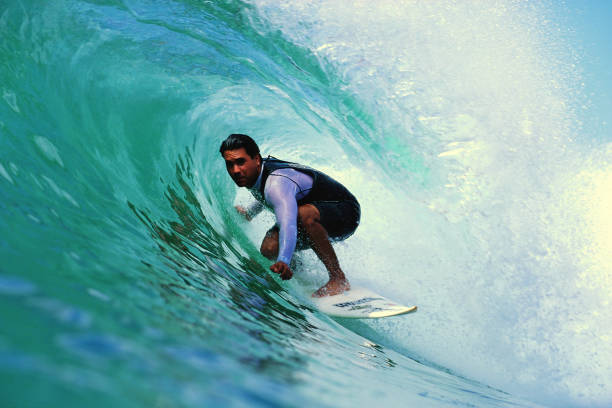
Let’s cut straight to the point. The ocean isn’t a lawless frontier, and the lineup isn’t a free-for-all. It’s a shared space with a code, an unspoken agreement between surfers who all want the same thing: a good wave and a good time. Mastering the waves isn’t just about your bottom turn or cutback; it’s about mastering your place in the pecking order and showing respect. Ignore this, and you’re not just a kook—you’re a hazard and a vibe-killer.
It all starts with the golden rule: the surfer closest to the peak has priority. This isn’t a suggestion; it’s the fundamental law of the lineup. The peak is where the wave first breaks, and the surfer who is deepest, or closest to that point, is in the best position to ride it. If you’re paddling for a wave and someone is inside of you—closer to the curl—you pull back. Period. Dropping in on someone, which means taking off in front of the rightful rider, is the cardinal sin. It’s dangerous, disrespectful, and a surefire way to get an earful or worse. Don’t be a snake, weaving through the pack to sneak into position at the last second. Everyone sees it, and no one respects it.
Getting out to the lineup requires its own brand of awareness. Don’t paddle straight through the heart of the take-off zone where people are riding waves. That’s the surfing equivalent of jaywalking on a freeway. Paddle wide, around the shoulder of the breaking waves. If you do find yourself in the path of a surfer who’s up and riding, it’s your responsibility to paddle behind them, toward the whitewater, not out into their line. A collision here is always the paddler’s fault.
Once you’re out there, don’t be a wave hog. Even if you’re catching fire and getting every set wave, show some awareness. If you’ve just ridden a wave all the way in, don’t immediately paddle back out and muscle your way back to the front of the line. Give others a chance. This is especially crucial at a crowded spot. Sharing is caring, and it keeps the mood in the water positive.
Communication is key, and in the surf, it’s often non-verbal. A simple “Go!” or a nod can prevent two people from going for the same wave. If you make a mistake and drop in on someone, a sincere apology goes a long way. A quick “My bad!” or “Sorry, bro!” can defuse tension. On the flip side, if someone burns you, don’t lose your cool and start a shouting match in the water. It ruins the stoke for everyone. Most seasoned surfers will give a kook one free pass, maybe with a calm word of correction. But repeated offenses won’t be tolerated.
Finally, know your limits. Don’t paddle out at Pipeline if you’re still mastering your pop-up at the beach break. Getting in over your head puts you and everyone around you in danger. You’ll be out of control, unable to dodge other surfers, and you’ll be clogging the lineup struggling to catch waves you can’t handle. Start where you belong, earn your stripes, and work your way up.
Respecting the lineup is about more than just rules; it’s about understanding that we’re all part of a tribe, sharing a finite resource of moving energy. It’s about humility, awareness, and mutual respect. Follow the code, and you’ll find your sessions are smoother, the vibes are better, and you’ll earn your place in the lineup. Break it, and you’ll be that guy—the one everyone side-eyes and avoids. The ocean is for everyone, but the wave belongs to the one who respects it enough to wait their turn. So paddle hard, surf with style, and always, always look out for your fellow surfer. That’s the real soul of the sport.