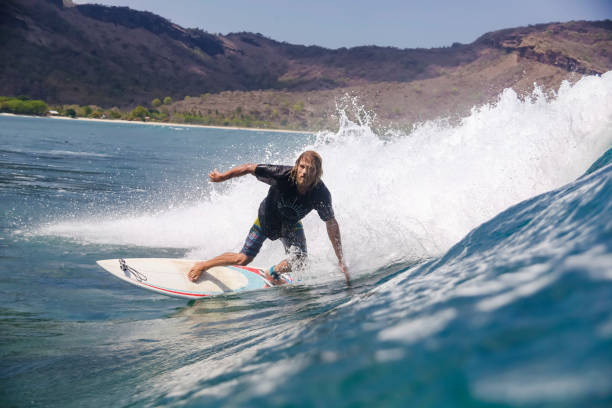
You see them in every lineup from Huntington to Uluwatu—loose, boxy, loud, hanging past the knee like a flag of defiance. They aren’t the sleek, neon-banded compression trunks that most groms are riding these days. No, these are Birdwells. The original baggie. The board short that has absolutely refused to fade into the recycle bin of surf fashion, and thank the tide gods for that.
Back in 1961, a surfer named George Birdwell started stitching canvas-like nylon in a little shop in Santa Monica. He wasn’t trying to chase trends. He was trying to solve a problem: surfers were ripping out the seams of their swim trunks on every bottom turn, and the wax and sand were chewing through cheap fabrics like a kook through a closeout rack. Birdwell responded with a double-layered, reinforced, bulletproof pair of shorts that could take a pounding on the reef and still look rad while you cracked a cold one in the parking lot. The design was simple—a wide, baggy cut, a drawstring waist, and those legendary metal snaps on the fly. No velcro. No elastic garbage. Just thick US-made nylon that creaks a little when you walk, like the deck of an old boat.
And that creak is exactly what makes them so gnarly. Riding in Birdwells is a full sensory experience. When you paddle, the fabric swishes and rumbles around your thighs like a friendly ghost. When you drop in on a steep face, they balloon up with water, giving you that extra drag that actually forces your body to work harder, to dig deeper, to earn every turn. That’s not a flaw. That’s a feature. The baggie was born for the soul surfer who doesn’t need a wetsuit-hugging speed-suit. It was born for the dude who wants to feel the ocean moving around his legs, not a second skin squeezing him like a tube of toothpaste.
Birdwells have outlived every board short fad because they refuse to be disposable. The company still makes them in the USA, using the same heavyweight nylon and industrial stitching. You can order a replacement drawstring, get the snaps re-pressed, even send them back for repairs. In a world where your five-mil rubber bootie tears after three sessions, that kind of longevity is almost spiritual. A pair of Birdwells will see you through your first broken board, your first barrel at those hollow beach breaks, your first dawn patrol with a hangover so thick you could paddle on it. And when you finally hang up the leash for the day, they don’t get thrown away. They get handed down to your buddy, or your kid, or some wide-eyed traveler who shows up at your local peak with nothing but a dream and a cheap wetsuit.
The culture around baggies has its own stoke, too. There’s an unspoken code. When you see another shredder in Birdwells, you nod with respect. You know they’ve been around the block, or at least they’ve done their homework. It’s a badge of anti-hype, a middle finger to the endless parade of skinny-jean boardshorts that fade and flake after a season. Baggies shout, “I’m here to surf, not to strut.” They don’t give a damn about your thigh gap or your tattoo placement. They just want to get wet, get salty, and get back to shore with a smile.
Even the modern baggie revival has a proper heart. Brands like the original Birdwell, plus newer players like Saturdays or Vissla, have started making “loose fit” cuts that mimic that classic silhouette. But nothing beats the real deal. That stiff, canvas-like touch when you pull them up over your boardies? That’s heritage. That’s history riding shotgun on your hips. Some surfers complain that baggies chafe on long paddles. Sure, apply some surf wax or zinc to the inner seams and you’re golden. Or just embrace the rub as a rite of passage. You haven’t truly earned your stripes until you have a baggie rash on your inner thighs that looks like a map of the California coast.
The beauty of the Birdwell baggie is that it’s not trying to be the fastest, the driest, or the most technical. It’s simply being the most honest. Waves come and go. Tides shift. Sponsors drop. But a solid pair of baggies from a brand that’s been holding down the beach for over sixty years? That’s as close to permanent as anything in this transient sport. So next time you’re waxing up between sets, look down at your trunks. If they don’t flap like a flag when the offshore wind hits, you might be missing out on a piece of surfing’s soul. Go loose, go loud, go Birdwell. The ocean will thank you.